
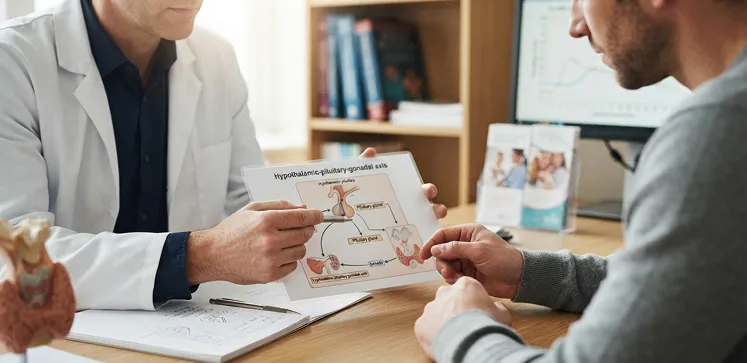
Hypogonadotropic hypogonadism (HH) is a hormonal condition that can interfere with the reproductive system in both men and women.
It occurs when the brain does not provide enough of the hormonal signals needed to stimulate the ovaries or testes. As a result, ovulation, sperm production, and normal sex hormone production may be reduced.
The good news is that hypogonadotropic hypogonadism does not always mean permanent infertility.
In many cases, fertility can be improved by treating the underlying cause and replacing or stimulating the missing reproductive hormones.
Hypogonadotropic hypogonadism is a form of secondary or central hypogonadism involving the hypothalamus and pituitary gland.
Normally, the hypothalamus releases gonadotropin-releasing hormone (GnRH). This signals the pituitary gland to produce two important reproductive hormones:
LH and FSH then act on the ovaries or testes. In HH, this signaling pathway is disrupted.
LH and FSH are often low or inappropriately normal, leading to reduced production of estrogen in women or testosterone and sperm in men.
The main fertility problem is that the reproductive organs do not receive enough hormonal stimulation.
Male infertility depends heavily on adequate stimulation from LH and FSH. When these hormones are deficient, testosterone production and sperm development can fall.
Some men with HH have extremely low sperm counts or azoospermia. However, fertility can often be restored with appropriate hormone treatment.
AUA/ASRM guidance notes that spermatogenesis and pregnancies can be achieved in many men with HH following treatment with gonadotropins or pulsatile GnRH.
For women, the most common fertility effect is irregular or absent ovulation. This may cause irregular periods or amenorrhea and make conception difficult.
Because the ovaries may still contain functioning follicles, stimulating the ovaries with appropriate gonadotropins can sometimes restore ovulation.
ASRM specifically recognizes gonadotropin treatment as an option for infertility caused by hypogonadotropic hypogonadism.
HH can have several causes. Some people are born with the condition, while others develop it later.
Potential causes include:
The exact cause matters because treating an underlying condition may help restore reproductive hormone function.
Symptoms vary depending on age, sex, hormone levels, and when the condition begins.
Men may experience:
Low testosterone combined with low or low-normal LH and FSH can suggest a problem involving the hypothalamus or pituitary rather than the testes themselves.
Women may notice:
Absent or irregular menstruation is often an important clue that further hormonal evaluation is needed.
Diagnosis usually starts with a medical history, physical examination, and blood tests.
Doctors may check reproductive hormones such as:
For men, testosterone is generally assessed with early-morning testing, and repeated testing may be needed to confirm consistently low levels.
Women with irregular or absent periods may have FSH, LH, and estradiol measured while other possible causes of menstrual dysfunction are considered. Depending on the findings, doctors may also investigate the pituitary gland with imaging such as an MRI.
A fertility evaluation may also include a semen analysis for men and assessment of ovulation, ovarian function, and reproductive anatomy for women.
Treatment depends on the cause and whether the immediate goal is symptom management or pregnancy.
For men with hypogonadotropic hypogonadism, treatment aims to restore the hormones needed for sperm production. Common options include:
Important: Testosterone replacement therapy can lower sperm production, so it is generally not used when a man is trying to have a child. A fertility specialist can recommend the right treatment based on the cause and hormone levels.
For women with HH, treatment aims to restore ovulation and improve the chance of pregnancy. Common options include:
Treatment should be carefully monitored because ovarian stimulation can increase the risk of multiple pregnancy and ovarian hyperstimulation syndrome (OHSS).
Yes, fertility can return in many people with hypogonadotropic hypogonadism, particularly when the reproductive organs themselves are capable of responding to hormonal stimulation.
For men, sperm production may take several months after treatment begins, so improvement is not necessarily immediate. For women, treatment can restore follicle development and ovulation when the ovaries are responsive.
The outcome depends on factors such as the underlying cause, age, ovarian or testicular function, other fertility factors, and the treatment used.
HH can make natural conception difficult because ovulation or sperm production may be impaired. However, the condition itself does not automatically prevent pregnancy.
Once appropriate treatment restores ovulation or sperm production, some couples may conceive naturally. Others may need fertility treatments such as IUI or IVF.
Because fertility depends on both partners, a complete evaluation is often useful rather than focusing only on the diagnosed hormone disorder.
Consider speaking with a gynaecology Clinic, fertility specialist clinic, or male reproductive specialist if:
Early evaluation can help identify the cause and determine which fertility options are appropriate.
Hypogonadotropic hypogonadism can affect fertility by reducing the LH and FSH signals needed for normal reproductive function. In women, this commonly leads to impaired ovulation. In men, it can reduce testosterone production and sperm formation.
However, HH does not necessarily mean permanent infertility. Hormone-based treatments can often restore ovulation or sperm production, and assisted reproductive technologies can provide additional options when needed.
The right approach depends on the underlying cause and the individual’s reproductive goals, so diagnosis and treatment should be guided by an endocrinologist or fertility specialist.


