Infertility Explained What It Is, Why It Happens, and Your Options

Infertility Explained: What It Is, Why It Happens, and Your Options

Infertility can feel emotionally difficult, especially when pregnancy is not happening despite regular attempts. Many individuals and couples feel confused, stressed, and unsure about the real cause behind it.

One of the biggest challenges is not knowing why conception is not taking place. In some cases, there are no clear symptoms or warning signs, which makes the situation even more frustrating and hard to understand.

In this article, you will get a simple and complete explanation of infertility. We will cover causes, symptoms, diagnosis, and treatment options such as In Vitro Fertilization, along with key risk factors and natural ways to support fertility.

Table of Contents

What Is Infertility?

Infertility is usually defined as the inability to get pregnant after 12 months of regular, unprotected sex.

For women over 35, doctors often use a shorter timeframe of 6 months.

It’s important to understand that infertility is not just a “female issue.” It can affect anyone, and in many cases, both partners may contribute to the difficulty.

There are two main types:

  • Primary infertility: When someone has never been able to conceive
  • Secondary infertility: When someone has had a pregnancy before but is now struggling to conceive again

How Common Is Infertility

How Common Is Infertility?

Infertility is more common than many people realize.

According to the World Health Organization, millions of people worldwide experience fertility challenges.

Roughly:

  • 1 in 6 couples may face infertility at some point
  • Male and female factors contribute almost equally
  • In some cases, no clear cause is found

This means if you are struggling, you are not alone—and support and treatment are available.

How Human Fertility Works?

To understand infertility, it helps to know how conception works.

In Women

Each month:

  1. The ovaries release an egg (ovulation)
  2. The egg travels through the fallopian tube
  3. If sperm is present, fertilization may occur
  4. The fertilized egg implants in the uterus

In Men

The body produces sperm continuously. Healthy sperm must:

  • Be present in adequate numbers
  • Move effectively (motility)
  • Have normal shape (morphology)

Fertilization

For pregnancy to happen:

  • A healthy egg and sperm must meet
  • The embryo must develop properly
  • The uterus must support implantation

Even a small disruption in this process can make conception difficult.

Causes of Infertility in Women

Female infertility can happen for many reasons, often related to ovulation, hormones, or reproductive organs.

Common Causes include:

  1. Ovulation Disorders
    Conditions like Polycystic Ovary Syndrome can disrupt ovulation.
  2. Blocked Fallopian Tubes
    Caused by infections, surgery, or conditions like Endometriosis.
  3. Hormonal Imbalances
    Issues with hormones like estrogen and progesterone can affect egg release.
  4. Uterine Problems
    Fibroids, polyps, or abnormalities in the uterus can prevent implantation.
  5. 5. Age-Related Factors
    Fertility naturally declines with age, especially after 35.
Causes of Infertility in Men

Causes of Infertility in Men

Male infertility is just as common and often linked to sperm health. Common Causes include:

  1. Low Sperm Count
    Not enough sperm to fertilize an egg.
  2. Poor Sperm Motility
    Sperm cannot swim effectively toward the egg.
  3. Abnormal Sperm Shape
    Makes fertilization more difficult.
  4. Hormonal Problems
    Low testosterone levels can affect sperm production.
  5. 5. Lifestyle Factors
    Smoking, alcohol, stress, and obesity can reduce fertility.

Unexplained Infertility (When No Cause Is Found)

In some cases, all tests come back normal, yet pregnancy still doesn’t happen. This is called unexplained infertility.

It can be frustrating, but it doesn’t mean pregnancy is impossible. Subtle factors like egg quality or timing, may play a role, even if they are not easily detected.

Risk Factors That Affect Fertility

Certain factors can increase the risk of infertility:

  • Age (especially over 35 for women)
  • Smoking and alcohol use
  • Poor diet and lack of exercise
  • Chronic stress
  • Exposure to environmental toxins
  • Medical conditions like diabetes or thyroid disorders

Understanding these risks can help you take steps to improve your chances of conception.

Risk Factors That Affect Fertility

Signs and Symptoms of Infertility

Infertility often has no obvious symptoms. The most common sign is simply the inability to conceive after trying for a certain period. Some signs may include:

In Women

  • Irregular or missed periods
  • Painful menstruation
  • Hormonal symptoms (acne, hair growth)

In Men

  • Changes in sexual function
  • Pain or swelling in the testicles
  • Low libido

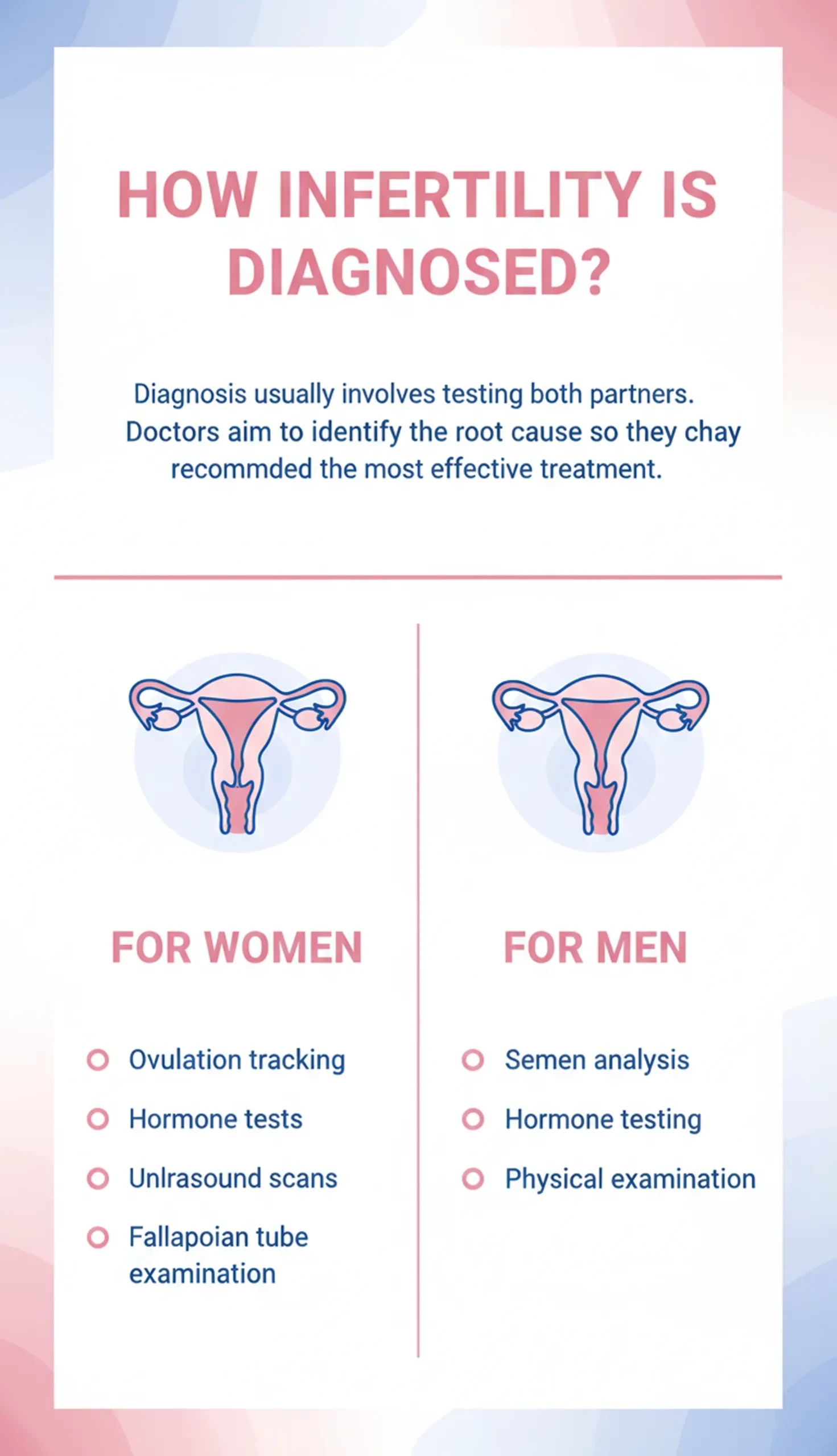
How Infertility Is Diagnosed?

Diagnosis usually involves testing both partners, often carried out in a top consultant-led private gynaecology clinic where specialists can provide a more thorough and personalized evaluation.

Doctors aim to identify the root cause so they can recommend the most effective treatment.

For Women

  • Ovulation tracking
  • Hormone tests
  • Ultrasound scans
  • Fallopian tube examination

For Men

  • Semen analysis
  • Hormone testing
  • Physical examination
How Infertility Is Diagnosed
Treatment Options for Infertility

Treatment Options for Infertility

Treatment depends on the cause, age, and overall health.

Common Treatments

  1. Medications
    Used to regulate hormones and stimulate ovulation.
  2. Intrauterine Insemination (IUI)
    Sperm is placed directly into the uterus during ovulation.
  3. In Vitro Fertilization (IVF)
    An advanced treatment where eggs are fertilized outside the body.
    In Vitro Fertilization is one of the most effective options for many couples.
  4. Surgery
    Used to correct structural issues like blocked tubes or fibroids.
  5. 5. Assisted Reproductive Technologies (ART)
    Includes advanced techniques to improve fertilization chances.

Each treatment plan is personalized, and success rates vary depending on individual factors.

Natural Ways to Support Fertility

While medical treatments are important, lifestyle changes can also support fertility.

Practical Steps

  • Maintain a healthy weight
  • Eat a balanced, nutrient-rich diet
  • Exercise regularly
  • Reduce stress through relaxation techniques
  • Avoid smoking and limit alcohol
  • Track ovulation cycles

These steps don’t guarantee pregnancy but can improve overall reproductive health.

Can Infertility Be Avoided?

Not all infertility can be prevented, but certain actions can reduce risk:

  • Avoid sexually transmitted infections
  • Maintain a healthy lifestyle
  • Seek early treatment for medical conditions
  • Limit exposure to harmful chemicals

Being proactive about your health can make a meaningful difference over time.

Natural Ways to Support Fertility

When to Seek Professional Help

You should consider seeing a best fertility clinic, if:

  • You’ve been trying for 12 months (or 6 months if over 35)
  • You have irregular periods
  • You have known reproductive health issues
  • You’ve had multiple miscarriages

Early evaluation can save time and improve your chances of success.

Conclusion

Infertility is a complex but manageable condition. It can result from a wide range of factors, affecting both men and women. While the journey can be challenging, understanding the causes and available options is the first step toward finding a solution.

From lifestyle changes to advanced treatments like In Vitro Fertilization, there are many paths to parenthood. The key is to stay informed, seek support when needed, and explore the options that are right for you.

With the right guidance and care, many people facing infertility go on to achieve their goal of having a family.