
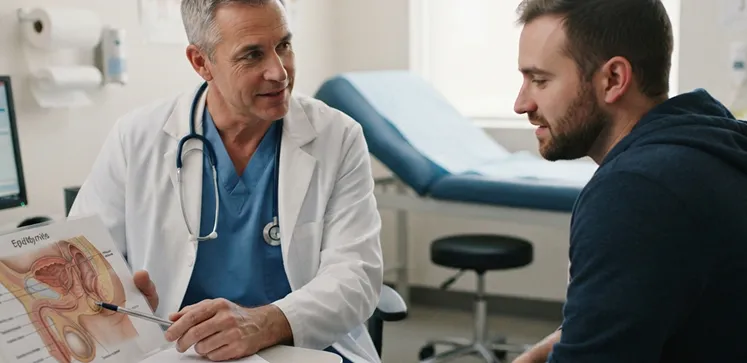
Epididymitis can cause sudden or gradually increasing pain and swelling in the scrotum, making everyday activities uncomfortable and sometimes worrying.
It is usually caused by an infection or inflammation of the epididymis, a small tube located behind each testicle. The good news is that most cases improve with appropriate treatment.
Understanding the common causes, symptoms, diagnosis, and treatment options can help you recognize the condition early and know when medical care is needed.
Epididymitis is swelling and inflammation of the epididymis. The epididymis is a small, coiled tube located behind each testicle. It stores and carries sperm.
Epididymitis usually affects one side of the scrotum, but it can sometimes affect both sides. It may start suddenly or develop slowly over time.
When symptoms last for less than six weeks, it is called acute epididymitis. When symptoms continue for six weeks or longer, it may be called chronic epididymitis.
Testicular or scrotal pain can have many causes. Some, such as testicular torsion, need urgent treatment. That is why it is important to see a healthcare professional rather than assuming the pain is caused by epididymitis.
The cause often depends on a person’s age, sexual activity, medical history, and other risk factors.
Common causes include:
In children and older adults, the causes may differ from those commonly seen in younger sexually active men.
Anyone with male reproductive anatomy can develop epididymitis, but certain factors can increase the likelihood.
Risk factors include:
Practicing safer sex and treating urinary or genital infections promptly can reduce the risk.
Epididymitis does not usually cause permanent infertility, particularly when it is diagnosed and treated early. However, severe, repeated, or untreated infections can sometimes cause scarring in the epididymis.
This scarring may interfere with the movement of sperm from the testicle. Fertility problems are more concerning when inflammation affects both sides or when complications develop.
If you are having difficulty conceiving after an episode of epididymitis, a doctor or fertility specialist clinic can assess sperm production and movement with tests such as a semen analysis.
Symptoms can appear gradually or develop relatively quickly. Common signs include:
Some people have only mild symptoms, while others experience significant pain and swelling.
Sudden, severe testicular pain requires urgent medical attention because testicular torsion can cut off blood flow to the testicle and needs emergency treatment.
A healthcare professional will usually begin by asking about your symptoms, sexual history, urinary symptoms, and medical history.
A physical examination can help identify swelling, tenderness, and other changes in the scrotum.
Depending on the situation, tests may include:
An accurate diagnosis matters because treatment depends on the underlying cause.
Treatment depends on whether the condition is caused by a bacterial infection or another form of inflammation.
Bacterial epididymitis is generally treated with antibiotics.
The specific medication depends on the suspected cause, including whether an STI is involved. It is important to take the prescribed course exactly as directed, even if symptoms begin improving.
If an STI caused the infection, sexual partners may also need testing and treatment.
Doctors may recommend measures to reduce discomfort, such as:
People with severe symptoms or complications may require additional treatment or hospital care.
Symptoms often begin improving within a few days after appropriate treatment, but complete recovery can take longer.
Pain, swelling, or tenderness may continue for several weeks even after the infection has been treated.
If symptoms are not improving or become worse after starting treatment, contact your healthcare professional.
Persistent symptoms may mean that another condition is present or that further evaluation is needed.
Home care can help manage symptoms, but it should not replace medical evaluation when an infection is suspected.
Rest, scrotal support, cold packs, and appropriate pain relief may make you more comfortable while prescribed treatment takes effect. However, use antibiotics only when a healthcare professional recommends them.
Avoid self-treating with leftover antibiotics because the wrong medication may not treat the underlying infection and can make future infections more difficult to manage.
When epididymitis is caused by an STI, sexual health becomes an important part of treatment.
Avoid sexual activity until your healthcare professional advises that it is safe, particularly when an STI is suspected or confirmed. Current and recent sexual partners may need testing and treatment to prevent reinfection.
Using condoms consistently can lower the risk of many sexually transmitted infections and may help reduce the risk of STI-related epididymitis.
Most people recover without serious long-term problems when epididymitis is treated appropriately. However, complications can occur, especially when treatment is delayed.
Possible complications include:
Prompt medical care can reduce the likelihood of these complications.
Not every case can be prevented, but several steps can lower your risk:
Regular sexual health care is particularly important if you have a higher risk of STI exposure.
See a fertility specialist if you develop testicular or scrotal pain, swelling, urinary discomfort, penile discharge, or other symptoms that could indicate an infection.
Seek emergency medical attention for sudden or severe testicular pain, especially if it develops quickly or is accompanied by nausea, vomiting, or a testicle that appears unusually positioned.
These symptoms can occur with testicular torsion, which is a medical emergency.
Epididymitis is a treatable condition, but scrotal pain should never be ignored. Infections, including sexually transmitted infections and urinary infections, are common causes.
Noninfectious inflammation can have other triggers. Early diagnosis helps identify the underlying cause and start appropriate treatment.
If symptoms include sudden severe testicular pain, seek urgent care rather than trying to diagnose or treat the problem at home.


