
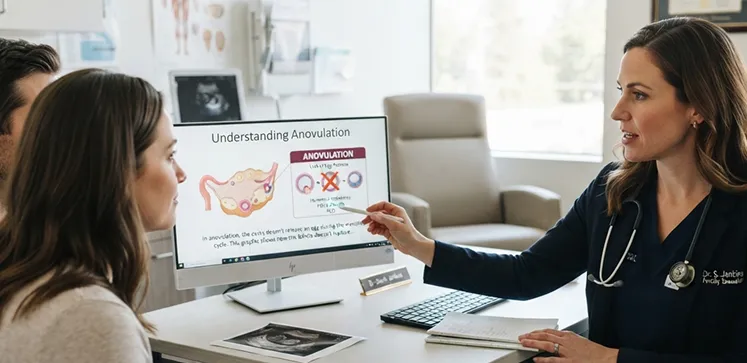
Anovulation occurs when the ovaries do not release an egg during a menstrual cycle. It can affect menstrual periods and make it harder to get pregnant.
Common signs include irregular periods, missed periods, and difficulty conceiving. However, some women may not notice any clear symptoms.
Understanding the causes, symptoms, and treatment options can help you identify anovulation and find the right care.
Anovulation happens when the ovaries do not release an egg during a menstrual cycle. Normally, an egg grows inside an ovary and is released when it is ready for fertilization.
Without the release of an egg, pregnancy cannot happen naturally during that cycle.
Anovulation can happen occasionally, even in women with regular periods. However, frequent anovulation may be linked to hormonal problems or health conditions.
Anovulation may cause changes in your menstrual cycle. Some women have clear symptoms, while others may not notice any changes.
Common signs include:
Other symptoms depend on the cause. For example, PCOS may cause acne, excess facial hair, or thinning hair.
These signs do not always mean you have anovulation. A fertility specialist can help confirm the cause.
Ovulation depends on communication between the brain, pituitary gland, and ovaries. When this hormonal system is disrupted, the ovaries may not release an egg.
Several factors can contribute to anovulation.
PCOS is one of the common causes of irregular or absent ovulation. It can involve elevated androgen levels, irregular menstrual cycles, and multiple small follicles in the ovaries.
These hormonal changes can prevent an egg from maturing and being released regularly.
Both an underactive thyroid (hypothyroidism) and an overactive thyroid (hyperthyroidism) can affect menstrual cycles and reproductive hormones. Treating the thyroid condition may help restore regular ovulation.
Prolactin is a hormone involved in breast milk production.
When prolactin levels are too high outside expected situations, they can interfere with the hormones responsible for ovulation and cause irregular or absent periods.
Significant emotional stress, excessive exercise, inadequate calorie intake, and major weight changes can disrupt the hormonal signals needed for ovulation.
In some cases, these factors contribute to functional hypothalamic amenorrhea.
Ovulation may become less predictable during perimenopause as ovarian function changes.
Certain medical treatments, including chemotherapy, and conditions that affect ovarian function can also contribute to anovulation.
Identifying the underlying cause matters because treatment depends on the specific hormonal or medical issue.
A doctor can use your menstrual history and simple tests to check whether you are ovulating.
Common tests include:
Ovulation predictor kits can detect a rise in luteinizing hormone (LH) before ovulation. However, they cannot confirm that an egg has been released.
Anovulation can make it difficult to get pregnant. This is because the ovaries do not release an egg for sperm to fertilize during that cycle. Without an egg, natural conception cannot occur.
However, anovulation does not always mean permanent infertility. Some women experience it occasionally, while others have underlying conditions that affect ovulation. Many of these conditions can be treated.
Treatment may help restore ovulation and improve your chances of pregnancy. Your chances also depend on your age, egg quality, sperm health, and other fertility factors.
If you are trying to conceive and have irregular or missed periods, speak with a fertility specialist. They can identify the cause and recommend suitable treatment to help you get pregnant.
Treatment for anovulation depends on its cause and your pregnancy goals. Options include lifestyle changes, medication, and fertility treatments.
Eating a balanced diet, getting enough sleep, managing stress, and exercising regularly may help support hormonal health and ovulation.
If anovulation is linked to weight changes, excessive exercise, or low-calorie intake, addressing these factors may help restore regular ovulation.
Conditions such as PCOS, thyroid disorders, and high prolactin levels can affect ovulation. Treating these conditions may help regulate your menstrual cycle.
Your doctor may recommend medication or other treatments based on the underlying cause and your symptoms.
Medicines such as letrozole and clomiphene citrate help stimulate ovulation in women trying to conceive. Letrozole is often the first choice for women with PCOS-related ovulation problems.
If these medicines do not work, doctors may recommend other ovulation-induction treatment options, such as injectable hormones. These treatments require medical supervision to reduce the risk of complications.
If other treatments are unsuccessful or unsuitable, your fertility specialist may recommend assisted reproductive treatments. The best option depends on your fertility needs and medical history.
In vitro fertilization (IVF) is one option. It involves fertilizing an egg with sperm in a laboratory and transferring the resulting embryo into the uterus.
Ovulation is when an ovary releases an egg. Anovulation occurs when no egg is released during a menstrual cycle.
|
Feature |
Ovulation |
Anovulation |
|
Egg release |
Egg is released |
No egg is released |
|
Hormones |
Normal cycle changes |
May be disrupted |
|
Periods |
Often regular |
May be irregular or absent |
|
Fertility |
Pregnancy is possible |
No natural conception that cycle |
|
Progesterone |
Usually rises |
Usually stays low |
|
Treatment |
Usually not needed |
Depends on the cause |
Regular periods do not always mean ovulation is occurring. A fertility specialist can help confirm whether ovulation is taking place.
See a doctor if you have irregular or missed periods or suspect you are not ovulating. Early evaluation can help identify the cause and guide treatment.
You should seek medical advice if you experience any of the following:
Do not wait to seek fertility advice if your periods are absent or you have a known reproductive health condition. Early treatment may help manage the cause and improve your chances of pregnancy.
Anovulation occurs when the ovaries do not release an egg. It can cause irregular periods, missed periods, and difficulty getting pregnant. Common causes include PCOS, thyroid problems, and hormonal imbalances.
Many causes of anovulation can be treated. Depending on the cause, treatment may include lifestyle changes, medication, or fertility treatments to help restore ovulation.
If you have irregular periods or difficulty conceiving, consult a gynaecology clinic. Early diagnosis can help you find the right treatment and improve your chances of pregnancy.


