Understanding Your Menstrual Cycle and What It Tells You About Fertility

Understanding Your Menstrual Cycle and What It Tells You About Fertility

Understanding your menstrual cycle can feel confusing, especially when you’re trying to know what’s normal and what affects your chances of getting pregnant. Many people deal with irregular periods, unclear ovulation timing, or not knowing how their cycle links to fertility. Sometimes, a gynaecology clinic can help identify what’s going on more clearly.

The problem is that most explanations are either too technical or too vague. This makes it hard to understand when you’re actually fertile, what signs to look for, and whether your cycle is healthy.

In this guide, you’ll find a clear and complete explanation of your menstrual cycle, each phase, and what it tells you about your fertility—so you can understand your body with confidence.

Table of Contents

What Is the Menstrual Cycle?

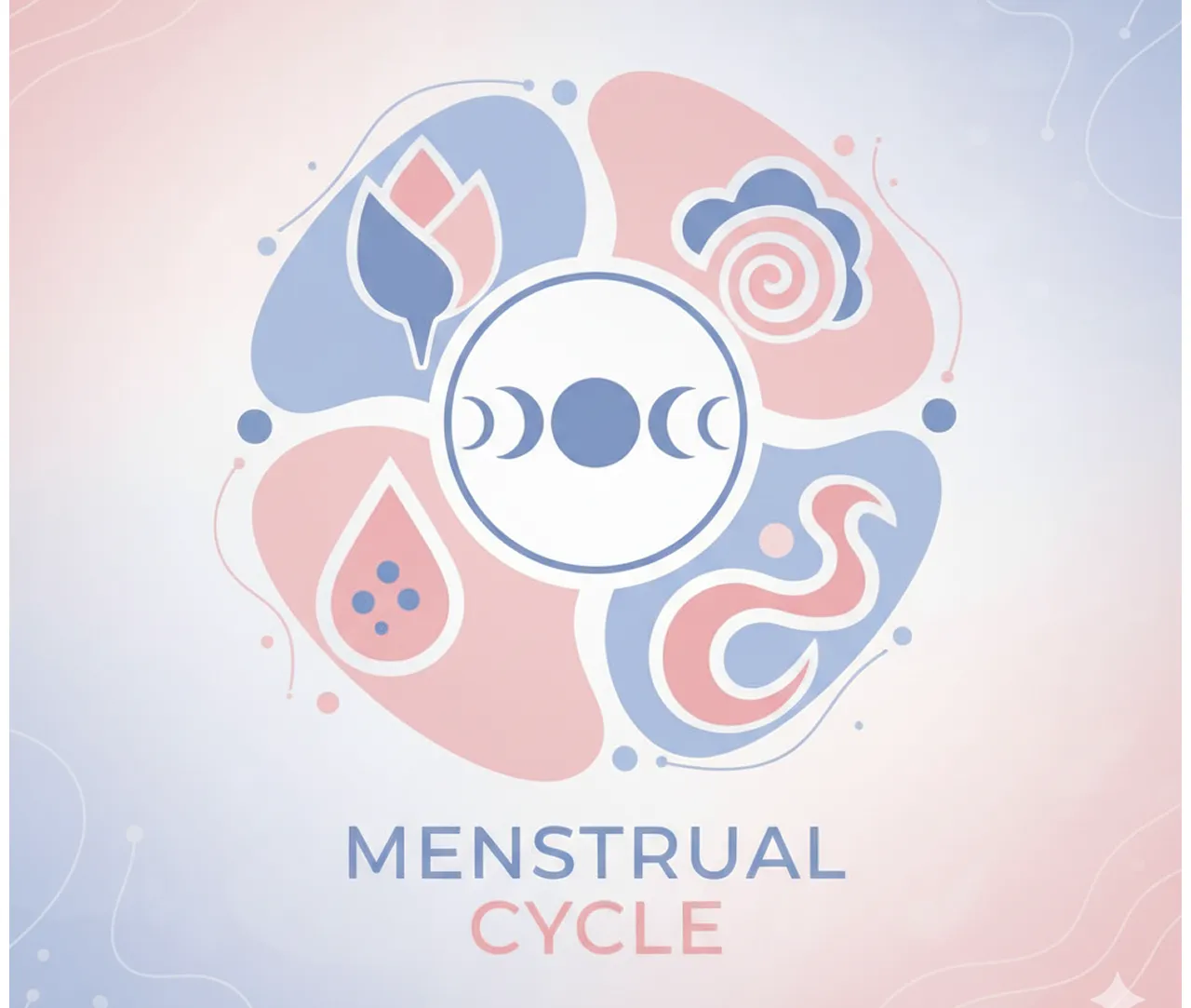
The menstrual cycle is a natural process your body goes through each month to prepare for pregnancy.

It involves a series of hormonal changes that regulate ovulation and the shedding of the uterine lining.

A typical cycle lasts between 21 and 35 days, although this can vary from person to person.

The cycle starts on the first day of your period and ends the day before your next period begins.

Two key hormones—estrogen and progesterone—control the cycle.

These hormones signal different stages of fertility and influence how your body prepares for a potential pregnancy.
What Is the Menstrual Cycle

The Four Phases of the Menstrual Cycle

Your menstrual cycle is made up of four main phases. Each phase plays a different role in preparing your body for a possible pregnancy. Understanding them helps you recognize when you are most fertile and whether your cycle is functioning normally.

1. Menstrual Phase (Period)

Bleeding begins as the uterine lining sheds. Hormones are low, usually lasting 3–7 days. Regular cycles suggest balance, while very heavy or painful periods may signal issues.

2. Follicular Phase

Start with your period as ovaries prepare an egg. Estrogen rises and rebuilds the uterine lining. A healthy phase supports ovulation and improves chances of conception later.

3. Ovulation Phase (Peak Fertility Window)

A mature egg is released and lasts 12–24 hours. This is the most fertile time. Sperm can survive up to 5 days, so conception chances are highest in this window.

Luteal Phase

Begins after ovulation as progesterone rises. The uterus prepares for pregnancy. If no fertilization occurs, hormones drop and the next period starts. It usually lasts 10–14 days.

How Your Cycle Indicates Fertility Health

Your menstrual cycle acts like a monthly report on your reproductive health. Regular patterns often suggest that ovulation is happening consistently, which is essential for conception.

Here are some signs of a healthy cycle:

  • Consistent cycle length each month
  • Predictable ovulation timing
  • Moderate and manageable period flow

On the other hand, irregular cycles, missed periods, or unusual symptoms may point to hormonal imbalances or ovulation problems.

Tracking your cycle over time helps you notice patterns and identify changes early.

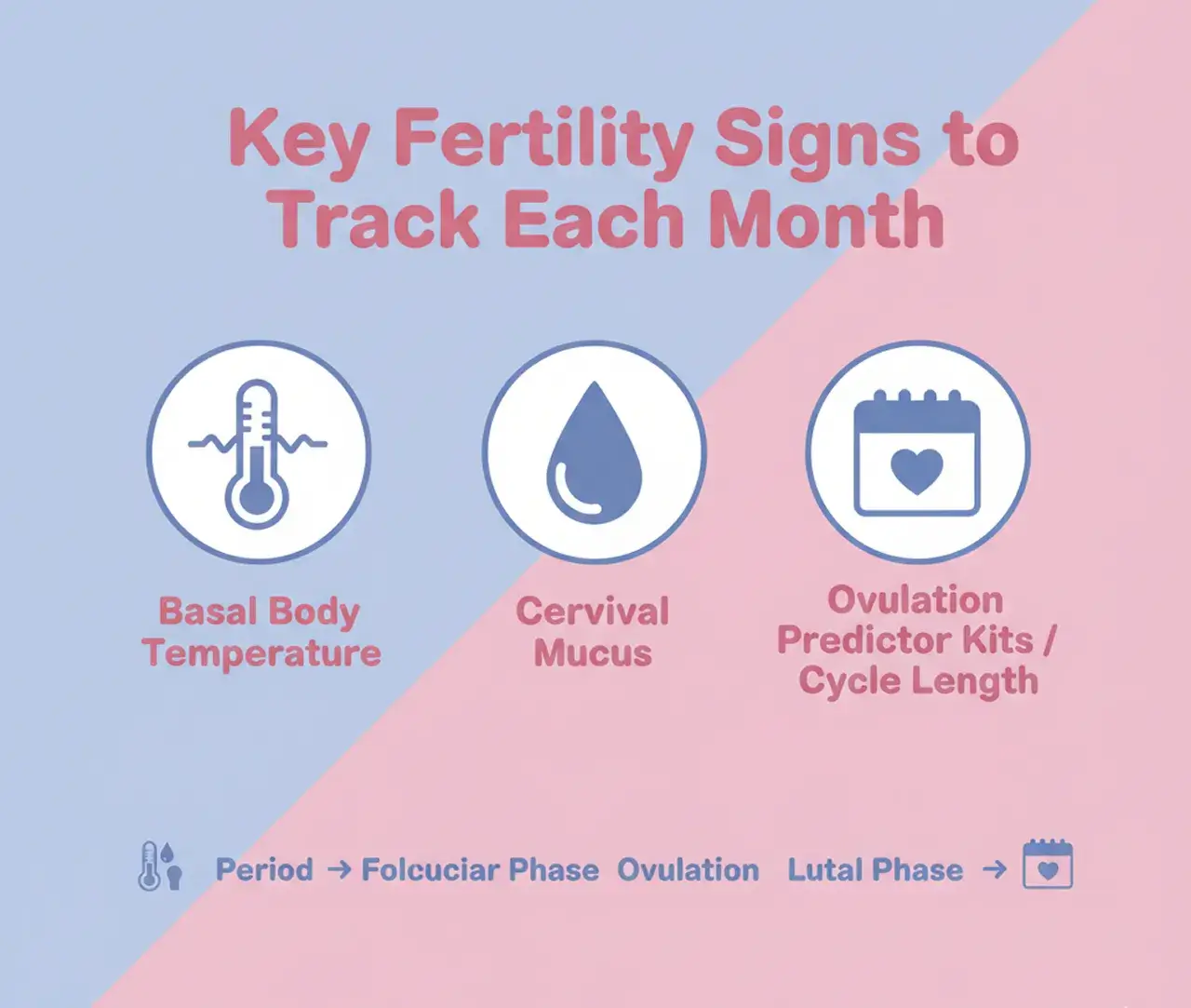
Key Fertility Signs to Track Each Month

Your body gives natural signals that show where you are in your cycle and when you’re most fertile.

  1. Cervical Mucus Changes
    Changes from dry to clear, stretchy mucus signal increasing to peak fertility.
  2. Basal Body Temperature (BBT)
    A slight rise in temperature confirms that ovulation has already occurred.
  3. Ovulation Pain (Mittelschmerz)
    Mild one-sided abdominal pain can indicate that ovulation is happening.
  4. 4. Hormonal Symptoms
    Higher energy at ovulation and fatigue or bloating after it reflect hormonal shifts.

Understanding Your Fertile Window

The fertile window is the time during your cycle when pregnancy is possible. It typically includes:

  • The 5 days before ovulation
  • The day of ovulation

Example:
If you ovulate on day 14, your fertile window is roughly days 9 to 14.

Since the egg survives for only about 24 hours, timing intercourse during this window significantly increases the chances of conception.

Understanding your fertile window can also help with natural family planning, whether you’re trying to conceive or avoid pregnancy.

Understanding Your Fertile Window

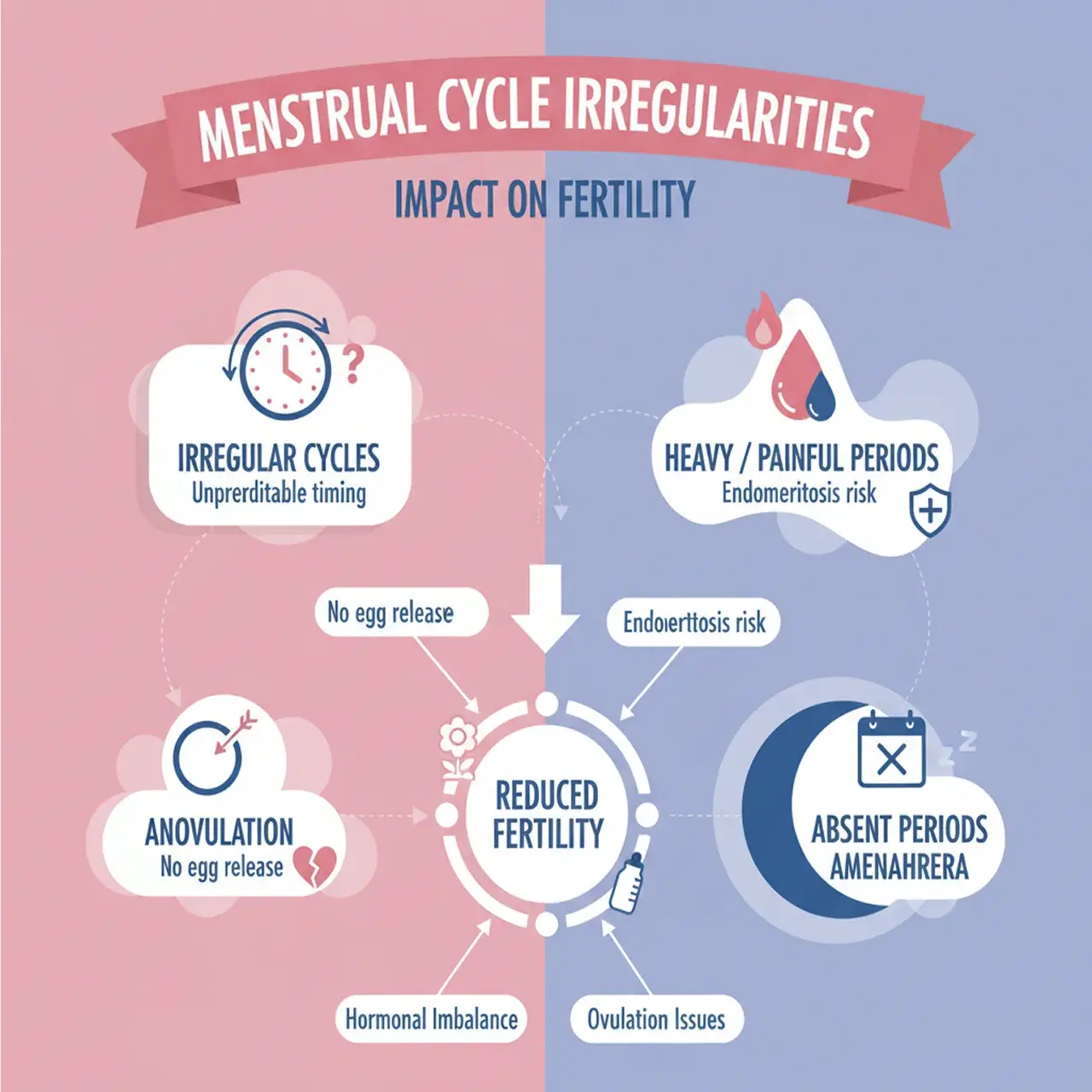
Common Menstrual Cycle Irregularities and Their Impact on Fertility

Not all cycles are perfectly regular, but certain irregularities can affect fertility.

  • Irregular Cycles
    Unpredictable cycle lengths can make it difficult to identify ovulation timing.
  • Anovulation (No Ovulation)
    A cycle without egg release means pregnancy cannot occur.
  • Heavy or Painful Periods
    Severe bleeding or pain may indicate conditions like Endometriosis or Uterine Fibroids.
  • Absent Periods (Amenorrhea)
    Missing periods may be linked to stress, hormonal imbalance, or conditions like Polycystic Ovary Syndrome.

Identifying and addressing these issues early can improve fertility outcomes.

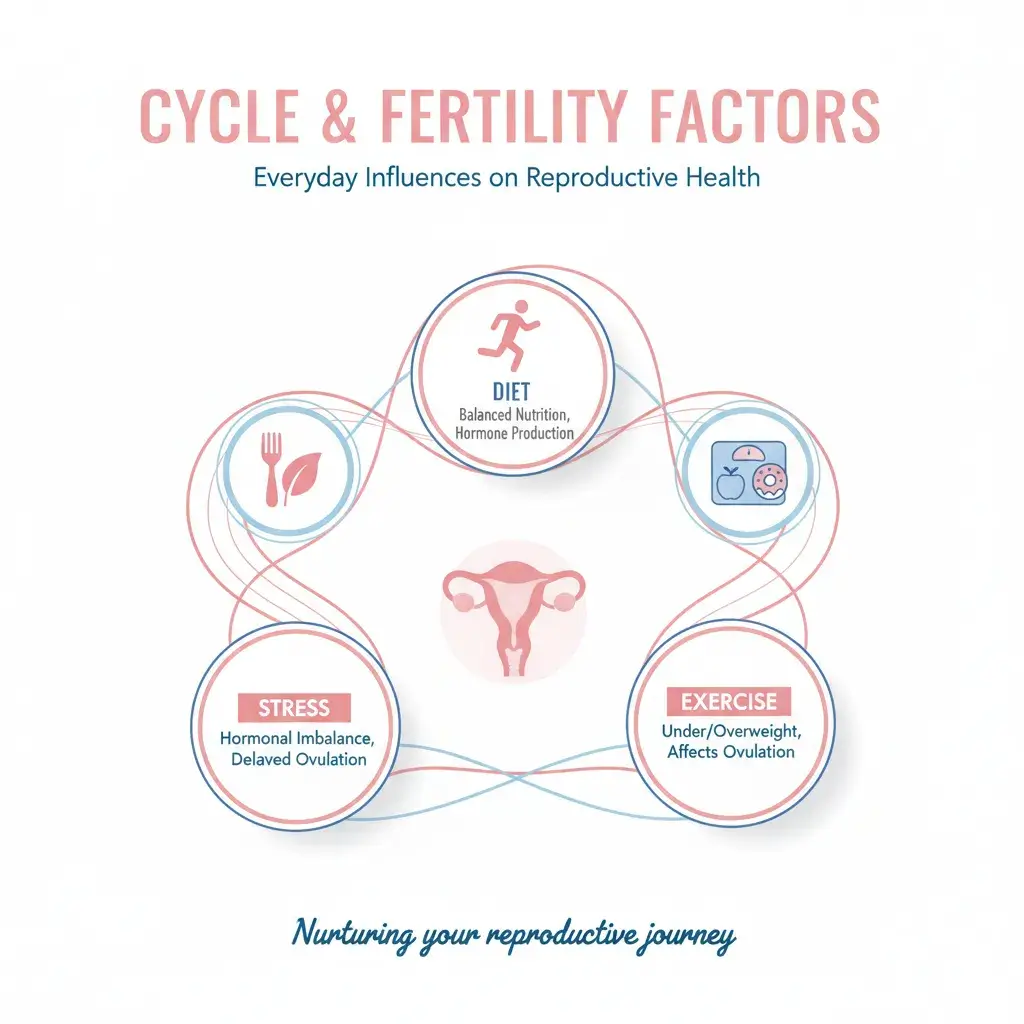
Factors That Affect Your Menstrual Cycle and Fertility

Several everyday factors can influence your menstrual cycle and fertility.

  • Stress can throw off your hormone balance and delay ovulation.
  • Eating a healthy, balanced diet helps your body produce the hormones needed for a regular cycle.
  • Regular exercise supports your cycle, but too much intense activity can sometimes disrupt it.
  • Your weight also plays a role, as being underweight or overweight can affect ovulation.
  • Certain health conditions, especially hormonal or thyroid issues, may interfere with fertility.

As you get older, fertility naturally decreases, particularly after your mid-30s.

When to Seek Medical Advice for Fertility Concerns

When to Seek Medical Advice for Fertility Concerns

While many cycle variations are normal, certain signs should not be ignored.

Consider consulting a fertility specialists if:

  • Your cycles are consistently shorter than 21 days or longer than 35 days
  • You frequently miss periods
  • You experience severe pain during menstruation
  • You’ve been trying to conceive for 12 months (or 6 months if over 35) without success

A specialist in Reproductive Endocrinology can help identify underlying issues and recommend treatment options.

Conclusion

Understanding your menstrual cycle gives you more control over your reproductive health. Each phase of the cycle plays a role in fertility, and small changes can provide important clues about how your body is functioning.

By tracking your cycle, recognizing fertility signs, and staying aware of irregularities, you can make informed decisions—whether your goal is to conceive or simply understand your body better.

Your menstrual cycle is not just a routine—it’s a valuable tool that, when understood properly, can guide you toward better health and fertility awareness.