🌸

Due Date Calculator

Enter the first day of your last period

⚠️ Please select a date first.
👩‍⚕️ Contact with Expert
Your Estimated Due Date (EDD)
🌷
weeks to go
days to go
trimester
weeks pregnant

Calculating a due date can feel confusing, especially when cycles are irregular or conception dates are unclear. Many people struggle to get a reliable estimate and end up unsure about how far along the pregnancy really is.

This uncertainty can create stress when planning checkups, preparing for delivery, or tracking pregnancy progress. Even small miscalculations can shift expectations and cause unnecessary worry.

This due date calculator is designed by top fertility clinic in London to give you a clearer and more reliable estimate. It brings together trusted medical methods in a simple way, so you can understand your pregnancy timeline with confidence.

Table of Contents

Why Does Due Date Calculation Matters?

Knowing your estimated due date is essential for several reasons. It provides structure to the pregnancy journey and helps both doctors and parents stay prepared.

Here’s why it matters:

  • It helps track fetal growth and development stage by stage
  • It allows doctors to schedule important prenatal tests at the right time
  • It supports planning for maternity leave and hospital arrangements
  • It helps identify if the baby is growing too early or too late
  • It gives emotional reassurance and a clear timeline for parents

Although babies rarely arrive exactly on the predicted date, having an estimated timeframe makes pregnancy monitoring much more organized and effective.


Easy Ways to Calculate Due Date

There are several ways to estimate a due date, ranging from digital tools to medical methods. Each approach uses different data points, but all aim to provide a reliable pregnancy timeline.

The most common methods include:

  • Using our online due date calculator
  • Manual calculation formulas
  • Spreadsheet-based tracking using Excel or Google Sheets

Let’s explore each of these in detail.

Using Our Due Date Calculator

The easiest way to estimate your due date is by using our online calculator. This tool is designed to be user-friendly and require minimal input.

Typically, you only need to enter:

  • The first day of your last menstrual period

Once entered, the calculator automatically estimates your due date based on standard pregnancy duration, which is approximately 40 weeks or 280 days from the first day of the last menstrual period.

This method is ideal for most users because it provides instant results with minimal effort.

Using Manual Calculation Formula

If you prefer to calculate your due date manually, you can use a simple and widely accepted formula.

Naegele’s Rule (Standard Method)

This method is based on a 280-day pregnancy cycle.

Steps:

  1. Take the first day of your last menstrual period
  2. Add 1 year
  3. Subtract 3 months
  4. Add 7 days

Example:

  • Last menstrual period: 1 January 2026
  • Add 1 year: 1 January 2027
  • Subtract 3 months: 1 October 2026
  • Add 7 days: 8 October 2026

Estimated due date: 8 October 2026

Estimated due date: 8 October 2026

This formula assumes a regular 28-day cycle and ovulation around day 14. If your cycle is longer or shorter, adjustments may be needed.

Using Excel or Google Sheet Table Template

For people who like tracking data, Excel or Google Sheets can be a helpful way to calculate and monitor pregnancy progression.

You can create a simple table like this:

  • Column A: Last Menstrual Period Date
  • Column B: Add 280 Days Formula
  • Column C: Estimated Due Date
  • Column D: Pregnancy Week Tracker

Example Formula in Excel:

=A2+280

Column A (LMP Date)Column B (Formula: +280 Days)Column C (Estimated Due Date)Column D (Pregnancy Week Tracker)
Enter Date=A2+280Auto CalculatedExample: Week 5, Week 12, etc.
Enter Date=A3+280Auto CalculatedExample: Week 6, Week 13, etc.
Enter Date=A4+280Auto CalculatedExample: Week 7, Week 14, etc.

Medical Methods Used to Calculate Due Date

As the top private gynaecology clinic in London, we don’t estimate due date based on guesswork.

We use medically approved methods that help give you the clearest and most reliable timeline for your pregnancy. 

Below are the main clinical approaches explained in a simple and easy way.

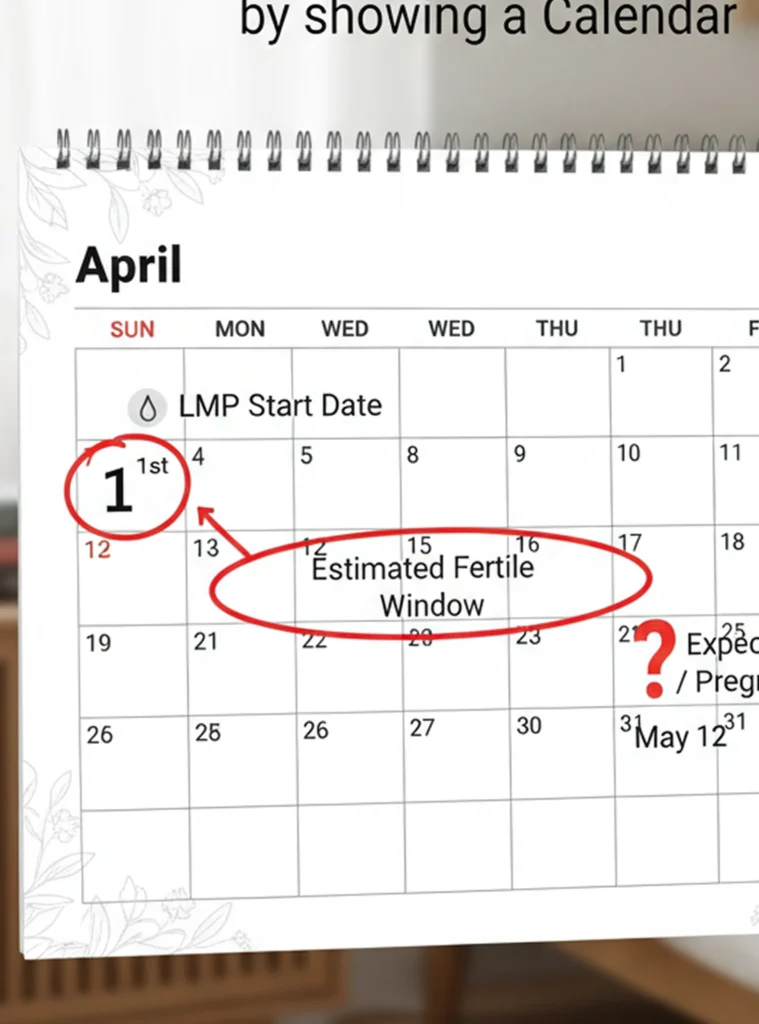
Last Menstrual Period (LMP) Method

This is the most commonly used starting point in early pregnancy care.

At Luna Clinic, we calculate pregnancy from the first day of your last menstrual period (LMP) and assume an average pregnancy duration of 40 weeks (280 days).

How it works:

  • Take the first day of your last period
  • Add 280 days (40 weeks)
  • This gives an estimated due date

When we use it:

  • Early pregnancy appointments
  • When menstrual cycles are regular
  • As an initial baseline before scans

This method is simple and widely used, but it may be less precise if your cycles are irregular.

Last Menstrual Period (LMP) Method
Conception Date-Based Calculation

Conception Date-Based Calculation

When the exact conception date is known, we can provide a more refined estimate.

This is often the case in planned pregnancies or when ovulation tracking is being used.

How it works:

  • Start from the known conception date
  • Add 266 days (around 38 weeks)
  • This gives the estimated due date

When it is used:

  • Monitored ovulation cycles
  • Planned natural conception
  • Fertility tracking situations

Because it starts from fertilization, this method is usually more accurate than LMP-based calculations.

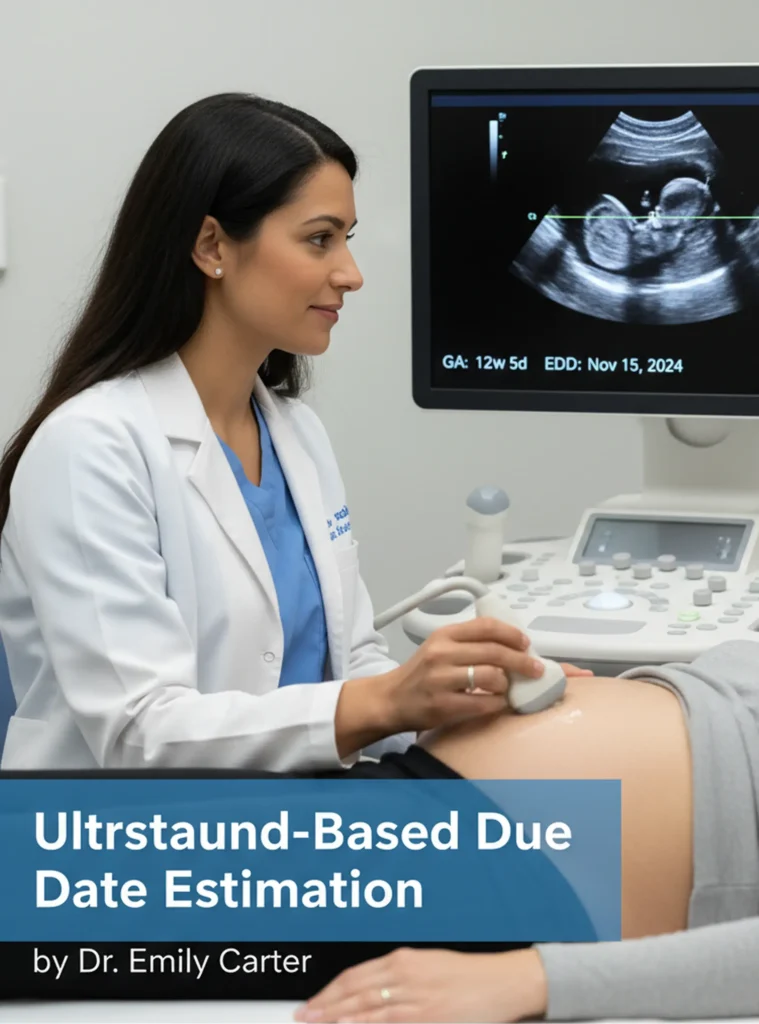
Ultrasound-Based Due Date Estimation

Ultrasound is one of the most accurate ways to confirm pregnancy dating, especially in early stages.

At Luna Clinic, we measure your baby’s growth and compare it with standard development charts.

How it works:

  • Early scan measures fetal size
  • Growth is matched with gestational age standards
  • Due date is adjusted if needed

When it is most helpful:

  • Irregular menstrual cycles
  • Uncertain or unknown LMP
  • Early pregnancy confirmation
  • When previous dates don’t match scan results

First-trimester ultrasound is considered the gold standard for accuracy in due date estimation.

Ultrasound-Based Due Date Estimation

IVF Transfer Date Calculation Method

For IVF pregnancies, we use a very precise calculation because fertilization timing is fully known and controlled.

At Luna Clinic, this allows us to give one of the most accurate due date estimates possible.

How it works:

  • Day 3 embryo transfer: Add 263 days
  • Day 5 embryo (blastocyst) transfer: Add 261 days

Why it is highly accurate:

  • Fertilization date is known exactly
  • Embryo development stage is documented
  • No uncertainty about ovulation timing

This makes IVF due date calculation more precise than natural conception methods.

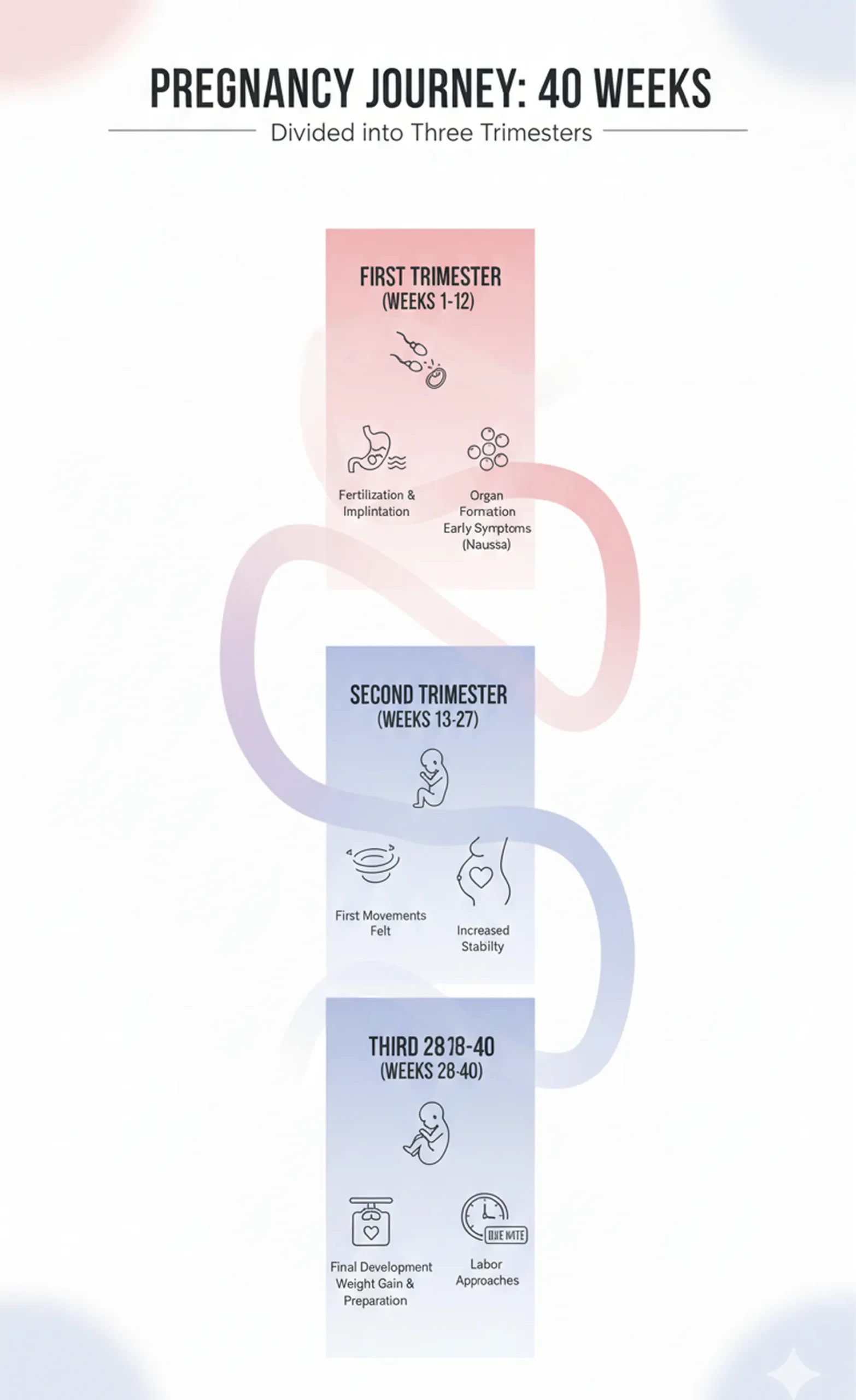
Pregnancy Timeline Breakdown

A full pregnancy typically lasts around 40 weeks and is divided into three trimesters.

First Trimester (Week 1–12)

  • Fertilization and implantation occur
  • Major organs begin forming
  • Early symptoms like nausea may appear

Second Trimester (Week 13–27)

  • Baby grows rapidly
  • Movement becomes noticeable
  • Pregnancy becomes more stable

Third Trimester (Week 28–40)

  • Final development stage
  • Baby gains weight and prepares for birth
  • Labor can begin anytime near the due date
Pregnancy Timeline Breakdown

Factors That Can Affect Your Due Date

Several factors can influence the accuracy of a due date calculation:

  • Irregular menstrual cycles
  • Late or early ovulation
  • Incorrect recall of last period date
  • Multiple pregnancies (twins or more)
  • Hormonal imbalances
  • Variations in fetal growth rate

Because of these variables, due dates should always be considered estimates, not exact predictions.

IVF and Fertility Treatment Due Date Calculation

Due Date Calculator for Irregular Cycles

If your menstrual cycle is irregular, standard calculations may not be fully accurate. In such cases:

  • Ultrasound becomes more reliable
  • Ovulation tracking can improve accuracy
  • Doctors may adjust due dates based on fetal measurements

For irregular cycles, medical evaluation is recommended instead of relying only on LMP-based calculation.

IVF and Fertility Treatment Due Date Calculation

For individuals undergoing fertility treatments, due date calculation is more controlled and precise. Key points:

  • Embryo transfer date is used as the starting point
  • Day 3 or Day 5 embryo stage determines adjustment
  • Pregnancy is tracked from fertilization rather than menstrual cycle

This method is widely used in assisted reproductive technology clinics and offers high accuracy compared to natural conception estimates.

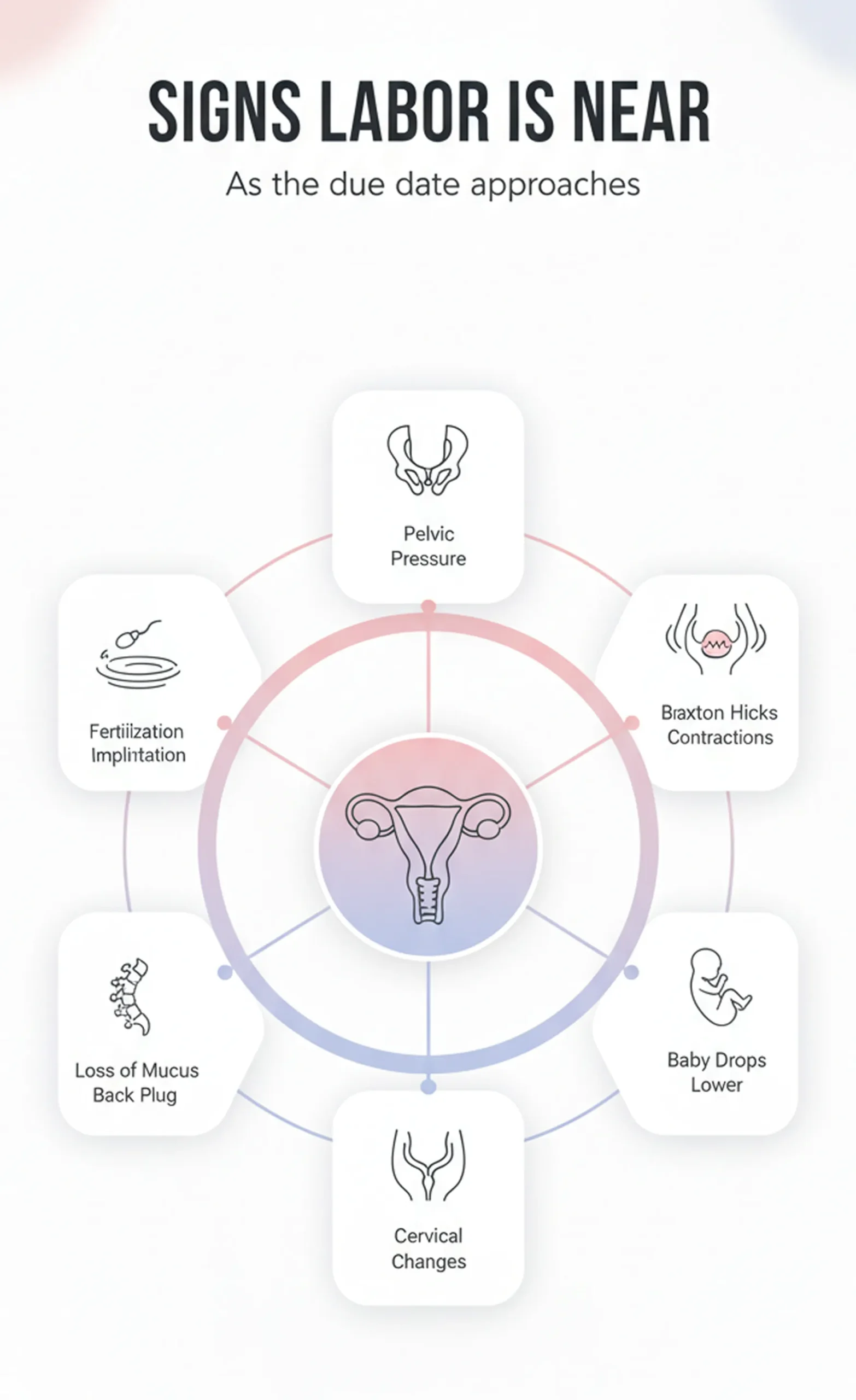
Signs Your Due Date May Be Near

As the estimated due date approaches, several signs may indicate that labor is close:

  • Increased pelvic pressure
  • Frequent Braxton Hicks contractions
  • Baby dropping lower in the abdomen
  • Cervical dilation changes
  • Loss of mucus plug
  • Increased back pain or discomfort

These signs vary from person to person, and labor timing can still differ from the estimated date.

Common Mistakes When Calculating Due Date

Many people make simple errors when estimating their due date. These include:

  • Misremembering the last menstrual period date
  • Assuming every cycle is exactly 28 days
  • Ignoring ovulation variation
  • Relying only on app-based predictions without medical confirmation
  • Confusing conception date with implantation date

Avoiding these mistakes ensures a more realistic pregnancy timeline.

Signs Your Due Date May Be Near

Conclusion

A due date calculator is an essential tool for understanding pregnancy timelines and preparing for childbirth. Whether you use an online calculator, manual formula, spreadsheet tracking, or medical methods like ultrasound or IVF-based estimation, each approach provides valuable insight into your pregnancy journey.

However, it is important to remember that due dates are estimates, not exact predictions. Every pregnancy is unique, and babies often arrive a few days before or after the calculated date.

By understanding different calculation methods and factors affecting accuracy, expectant parents can better plan, stay informed, and confidently navigate each stage of pregnancy.