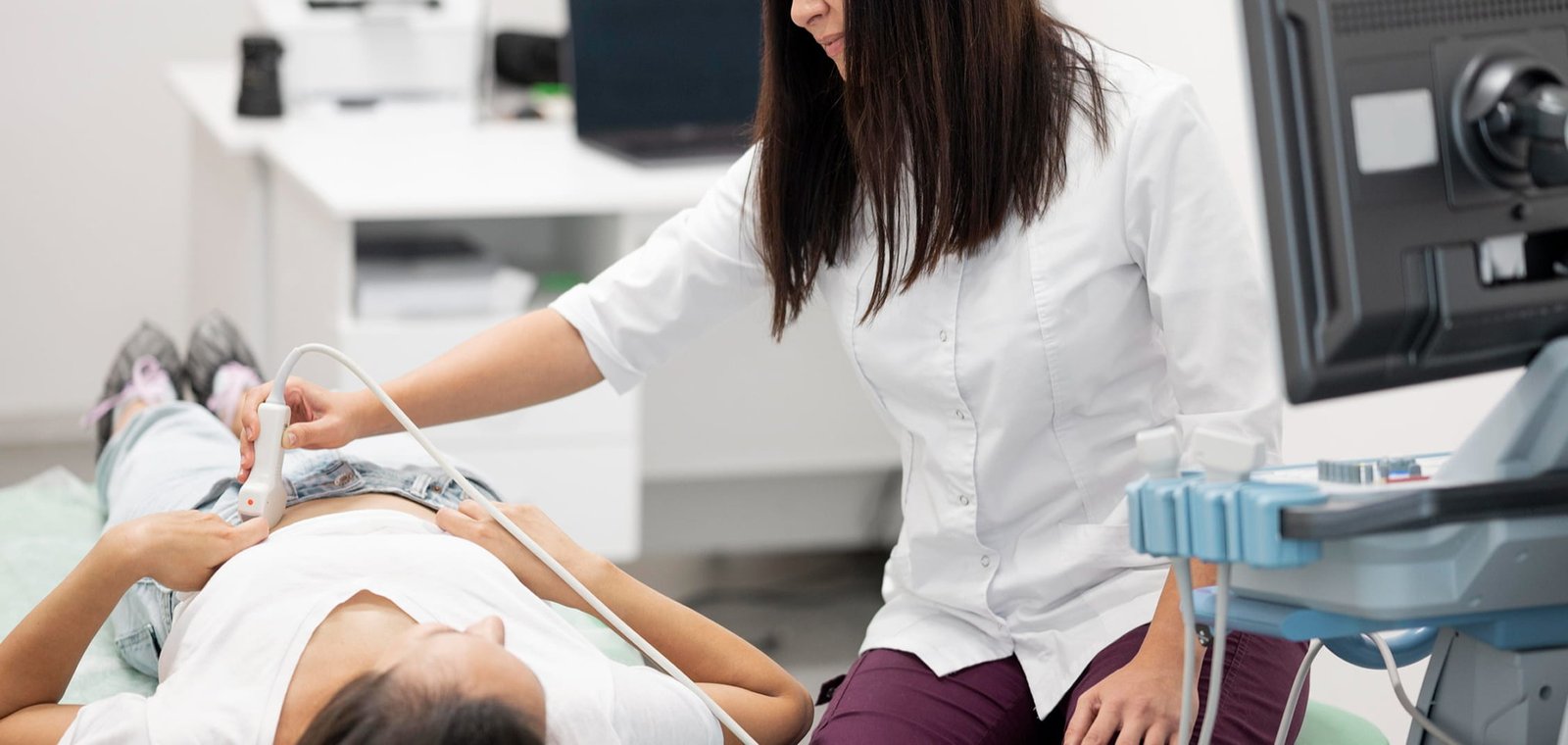
Outpatient ultrasound assessment of your fallopian tubes, without X-ray radiation
Finding out whether your fallopian tubes are open is one of the most important pieces of a fertility investigation, and it doesn’t have to mean X-ray radiation or a trip to a radiology department. HYCOSY gives you that answer using ultrasound alone, in the same setting as the rest of your care.
Our HYCOSY — hysterosalpingo-contrast sonography — assesses whether your fallopian tubes are open by tracking a contrast fluid in real time as it’s gently passed through the cervix and along each tube, and can often be combined with a full pelvic ultrasound in the same visit.
This may be for you if:
You're being investigated for fertility difficulties and need tubal patency assessed
You're being investigated for fertility difficulties and need tubal patency assessed
You want your uterine cavity, fibroids or polyps assessed in the same visit
You've been offered a traditional X-ray hysterosalpingogram and want to understand your options
You shouldn’t have to choose between a thorough fertility work-up and avoiding unnecessary radiation — with HYCOSY, you don’t have to.
HYCOSY works by introducing a small amount of contrast fluid through a thin catheter placed at the cervix, then tracking it in real time using transvaginal ultrasound as it fills the uterine cavity and passes along each fallopian tube. If a tube is open, the fluid flows through it and spills freely at the far end; if a tube is blocked, its passage is visibly interrupted, showing the point of obstruction. The whole assessment is visualised directly on ultrasound, in real time, in the same way as your other pelvic scans.
This gives your consultant the same core information as a traditional X-ray hysterosalpingogram — whether each tube is open or blocked — without the ionising radiation, and without needing a separate radiology appointment. Because it’s performed with ultrasound, it can also be combined with a full assessment of your uterine cavity, ovaries, fibroids or polyps in the same sitting, giving a more complete picture of your reproductive anatomy in a single visit rather than several separate tests.
What's included:
Real-time ultrasound assessment of tubal patency
No X-ray radiation, unlike a traditional hysterosalpingogram
A combined pelvic ultrasound in the same visit, where relevant
Clear explanation of your results as part of your wider fertility work-up
Clinical value & benefits
Confirms whether each fallopian tube is open — a key factor in unexplained fertility difficulty
No ionising radiation, unlike a traditional X-ray hysterosalpingogram
Usually performed without anaesthesia, as a same-day outpatient procedure
Can be combined with a full pelvic ultrasound, assessing your uterine cavity and ovaries in the same visit
Part of your wider fertility work-up
Our HYCOSY result is always interpreted alongside the rest of your fertility investigations, so it informs a genuine next step in your treatment plan, whether that’s reassurance that your tubes are open, or a conversation about what to do if they’re not.
Why women choose HYCOSY at LUNA:
No ionising radiation, with comparable accuracy to a traditional X-ray hysterosalpingogram
Usually done without anaesthesia, as an outpatient procedure
Often combined with a full pelvic ultrasound in the same visit
Related care
LUNA Fertility
for the wider fertility investigation HYCOSY forms part of
Most women don’t need anaesthesia for HYCOSY. It can cause period-like cramping for a short time during the procedure, similar to a smear test or an X-ray hysterosalpingogram.
How accurate is HYCOSY compared to an X-ray hysterosalpingogram?
HYCOSY provides comparable information on tubal patency to a traditional X-ray hysterosalpingogram, without the ionising radiation involved in that test.
When in my cycle is HYCOSY performed
It’s usually done in the first half of your cycle, after your period has finished and before ovulation — we’ll confirm the right timing for you when booking.
Can HYCOSY be combined with other tests?
Yes — we can often combine it with a full pelvic ultrasound in the same visit, assessing your uterine cavity, fibroids or polyps alongside your tubes.
What happens if HYCOSY shows a blocked tube?
We’ll talk through what that means for your specific fertility plans and the realistic next steps, whether that’s further investigation or moving toward a different treatment pathway.
Catch this early, while you still have options.
Book your Insulin Resistance & Metabolic Risk assessment today.