Having Trouble Conceiving Again? A Guide to Secondary Infertility

Having Trouble Conceiving Again? A Guide to Secondary Infertility

Trying for another baby and not seeing results can feel confusing and frustrating. You already know your body can conceive, so when it doesn’t happen again, it often brings unexpected stress, doubt, and even guilt.

Many couples in this situation struggle with unanswered questions. Is it age, health changes, or something from the previous pregnancy? The uncertainty can make the journey feel even harder, especially when you are not sure where to turn for answers or support from a top rated fertility clinic.

The good news is that secondary infertility is more common than people think—and in many cases, it is treatable. This guide will walk you through the causes, signs, diagnosis, and solutions in a clear and simple way so you can understand exactly what is happening and what to do next.

Table of Contents

What Is Secondary Infertility?

Secondary infertility refers to the inability to conceive or carry a pregnancy to term after previously giving birth without assisted reproductive treatments.

In simple terms, you’ve had a successful pregnancy before, but now you’re facing difficulties getting pregnant again despite trying for a reasonable period:

  • 12 months for women under 35
  • 6 months for women over 35

It can feel unexpected, especially if your first pregnancy was smooth and uncomplicated.

What Is Secondary Infertility

How Common Is Secondary Infertility?

Secondary infertility is more common than many people think. In fact, it accounts for a significant portion of fertility-related challenges worldwide.

Many couples delay having additional children due to career, finances, or personal reasons. As a result, age-related changes and other factors can impact fertility by the time they try again.

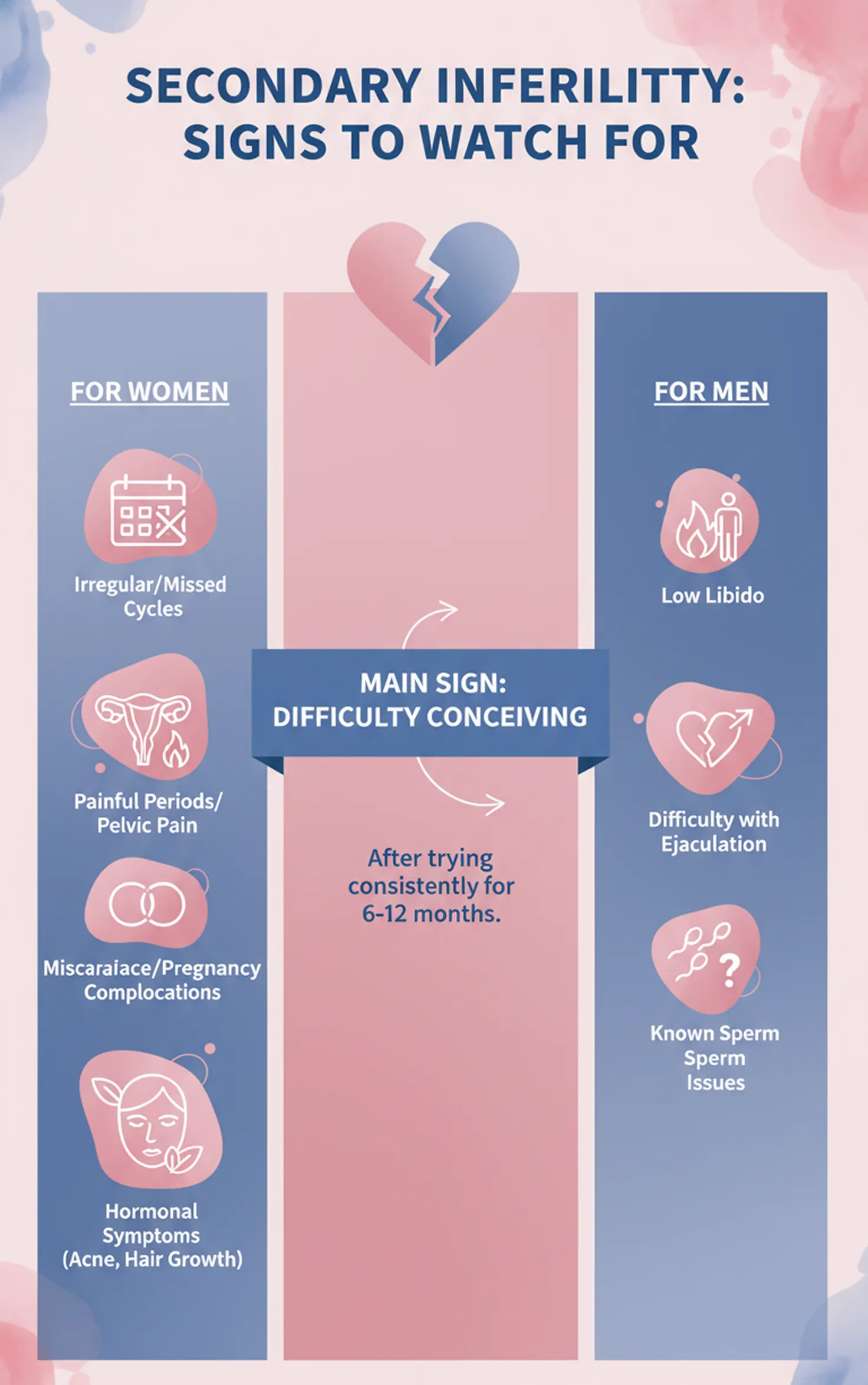
Signs You May Be Experiencing Secondary Infertility

The main sign is difficulty conceiving after trying consistently.

However, there are other indicators that may suggest an underlying issue:

  • Irregular or missed menstrual cycles
  • Painful periods or pelvic pain
  • Changes in ovulation patterns
  • Previous miscarriage or pregnancy complications
  • Hormonal symptoms such as acne or unusual hair growth

For men, signs may include:

  • Low libido
  • Difficulty with ejaculation
  • Known sperm-related issues
Signs You May Be Experiencing Secondary Infertility

Main Causes of Secondary Infertility (Comprehensive Breakdown)

Secondary infertility can result from a range of factors that develop or change over time, even after a previous healthy pregnancy.

Understanding these underlying causes is essential for identifying the right treatment and improving your chances of conceiving again.

Age-Related Fertility Changes

Age-Related Fertility Changes

Age plays a major role in fertility, especially for women. As women get older:

  • Egg quantity decreases
  • Egg quality declines
  • Hormonal balance shifts

Men can also experience age-related changes, including reduced sperm quality and motility.

Ovulation Disorders

Ovulation problems are one of the most common causes. Conditions that affect ovulation include:

If ovulation doesn’t occur regularly, conception becomes much more difficult.

Structural Issues in the Reproductive System

Physical changes in the reproductive organs can develop over time, even after a previous pregnancy. These include:

  • Blocked fallopian tubes
  • Uterine fibroids
  • Scar tissue from previous surgeries or infections
  • Endometrial abnormalities

These conditions can prevent fertilization or implantation.

Male Factor Infertility

Secondary infertility isn’t only about female health.

Male fertility can change over time due to:

  • Reduced sperm count
  • Poor sperm motility
  • Lifestyle habits
  • Medical conditions or medications

Even if there were no issues before, changes can occur later.

Complications from Previous Pregnancy or Delivery

Past pregnancies can sometimes lead to complications that affect future fertility, such as:

  • Infection after delivery
  • Retained placental tissue
  • Uterine scarring
  • Surgical interventions like cesarean section

These issues may not show symptoms immediately but can impact future conception.

Lifestyle and Environmental Factors

Modern lifestyle habits play a bigger role than many realize. Factors that can affect fertility include:

  • Smoking
  • Alcohol consumption
  • Poor diet
  • Lack of physical activity
  • High stress levels
  • Exposure to environmental toxins

Even small, long-term habits can influence reproductive health.

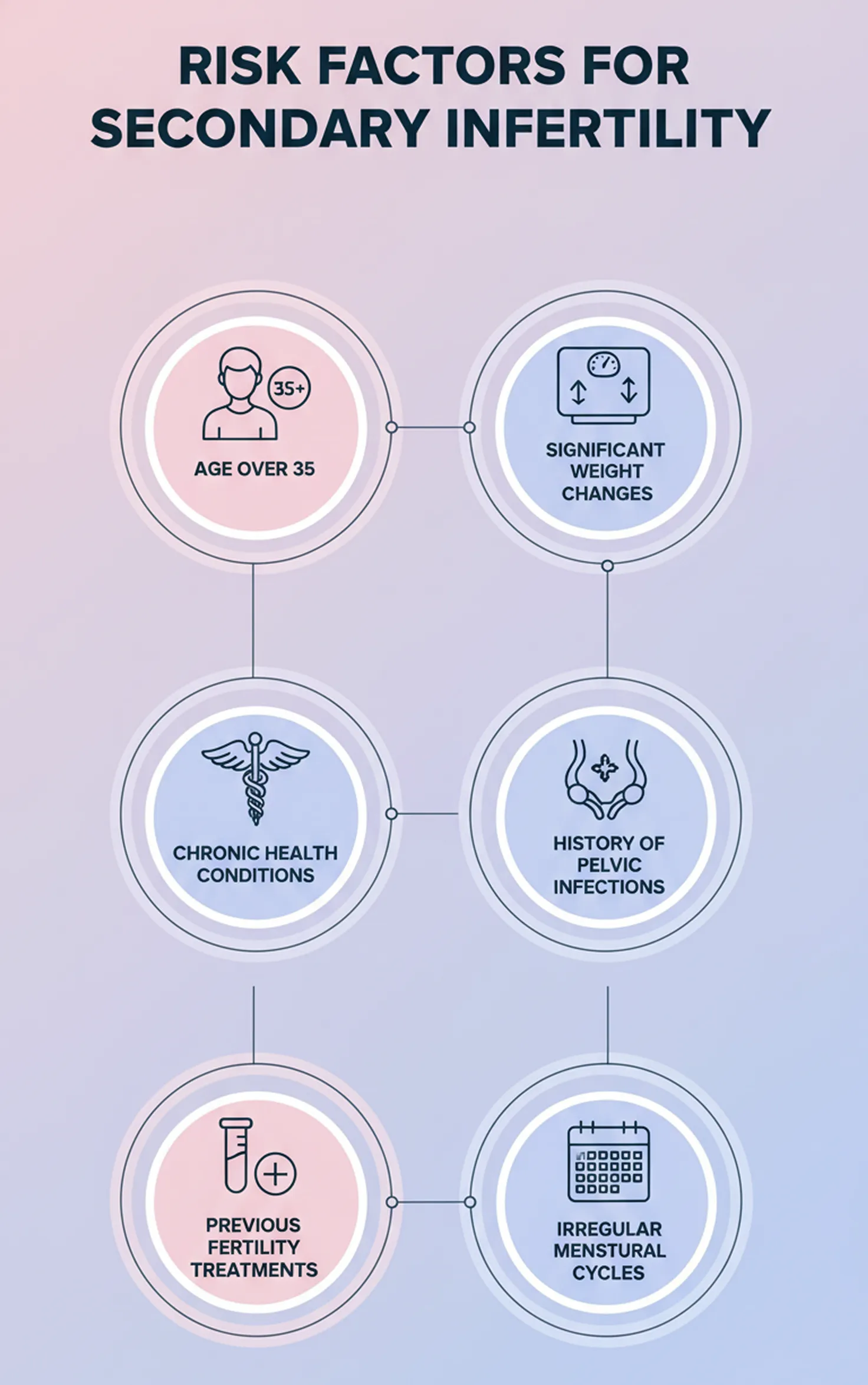
Risk Factors That Increase the Chances of Secondary Infertility

Certain factors can increase the likelihood of facing secondary infertility, often developing gradually over time without obvious symptoms.

Being aware of these risks early can help you take timely steps and improve your chances of conceiving again. 

  • Age over 35
  • Significant weight gain or loss
  • Chronic health conditions (e.g., diabetes)
  • History of pelvic infections
  • Previous fertility treatments
  • Irregular menstrual cycles

Understanding these risks can help you take early action.

How Secondary Infertility Is Diagnosed

Diagnosis usually involves evaluating both partners. The goal is to identify the root cause and guide treatment effectively.

For women:

For men:

  • Semen analysis
  • Hormonal testing

Doctors may also review medical history, previous pregnancies, and lifestyle factors.

Treatment Options for Secondary Infertility

Treatment depends on the underlying cause, and many couples benefit from a combined approach to improve their chances of conception.

Common treatment options include:

  • Lifestyle changes (healthy weight, balanced diet, stress reduction, regular exercise, avoiding smoking and alcohol)
  • Ovulation tracking to improve timing
  • Medications to stimulate ovulation and regulate hormones
  • Assisted reproductive technologies (IUI, IVF, donor eggs or sperm if needed)
  • Surgical treatments for issues like fibroids, blocked tubes, or endometrial conditions

With the right diagnosis, treatment can be tailored to effectively support a successful pregnancy.

Can You Prevent Secondary Infertility?

While not all cases of secondary infertility can be prevented, many risks can be reduced with the right awareness and early action. 

Small, consistent steps toward better health can make a meaningful difference over time.  You can reduce your risk by:

  • Planning pregnancies with age in mind
  • Maintaining a healthy lifestyle
  • Treating medical conditions early
  • Attending regular health check-ups
  • Seeking medical advice if conception is delayed

Prevention is about being proactive rather than reactive.

When to See a Fertility Specialist

Early evaluation can help identify problems sooner and improve your chances of successful treatment. You should consider seeing a specialist if:

  • You’ve been trying for 12 months (or 6 months if over 35)
  • You have irregular periods
  • You’ve had multiple miscarriages
  • You have a known reproductive condition
  • Your partner has known fertility issues

Early consultation can save time and improve outcomes.

Conclusion

Secondary infertility can feel confusing and frustrating, especially after having a successful pregnancy before. However, it is a common issue, and in many cases, it is treatable.

Understanding the possible causes, recognizing early signs, and seeking timely medical advice are key steps toward finding a solution. With the right approach—whether through lifestyle changes, medical treatment, or advanced fertility techniques—many couples go on to conceive again.

If you’re facing this challenge, you’re not alone, and there are clear, practical paths forward.