
How Age Affects Fertility in Men and Women Complete Guide

How Age Affects Fertility in Men and Women: Complete Guide

Many people start thinking about fertility only when they are ready to have a child. At that point, questions and worries often come up—Am I too old? Why is it taking longer than expected? Does age really matter this much? These concerns are very common, especially when information online feels confusing or overwhelming.

One of the biggest challenges is not knowing what changes are actually normal. Some people assume fertility stays the same for years, while others fear the worst too early. This uncertainty can lead to stress, delays in decision-making, and missed opportunities to take the right steps at the right time.

In this guide, you’ll get a clear and complete explanation of how age affects fertility in both men and women. Everything is broken down in a simple, practical way so you can understand what’s happening in your body and what you can realistically expect.

Table of Contents

How Age Impacts Reproductive Health

Age affects fertility because of natural biological processes. In women, fertility declines mainly due to changes in egg quantity and quality.

If you are looking for expert guidance or evaluation, a gynaecology clinic in London can help assess reproductive health and provide personalized advice.

  • A decrease in the number of eggs (ovarian reserve)
  • Reduced egg quality over time
  • Hormonal changes that affect ovulation

Women are born with all the eggs they will ever have. As the years pass, both the quantity and quality of these eggs decline, especially after the mid-30s.
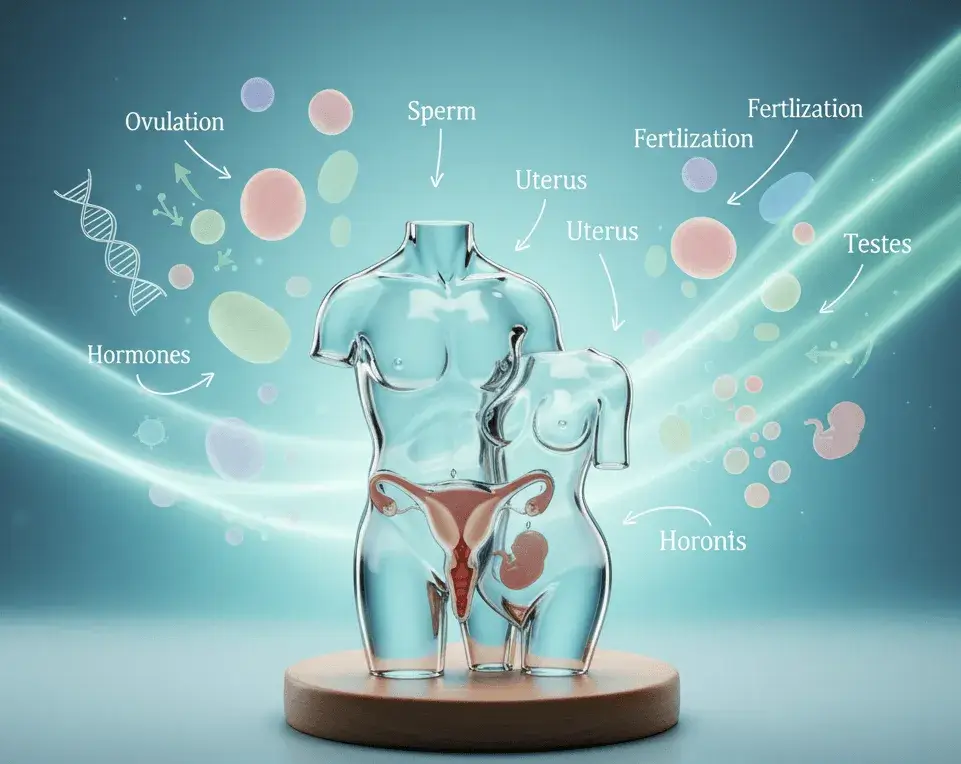
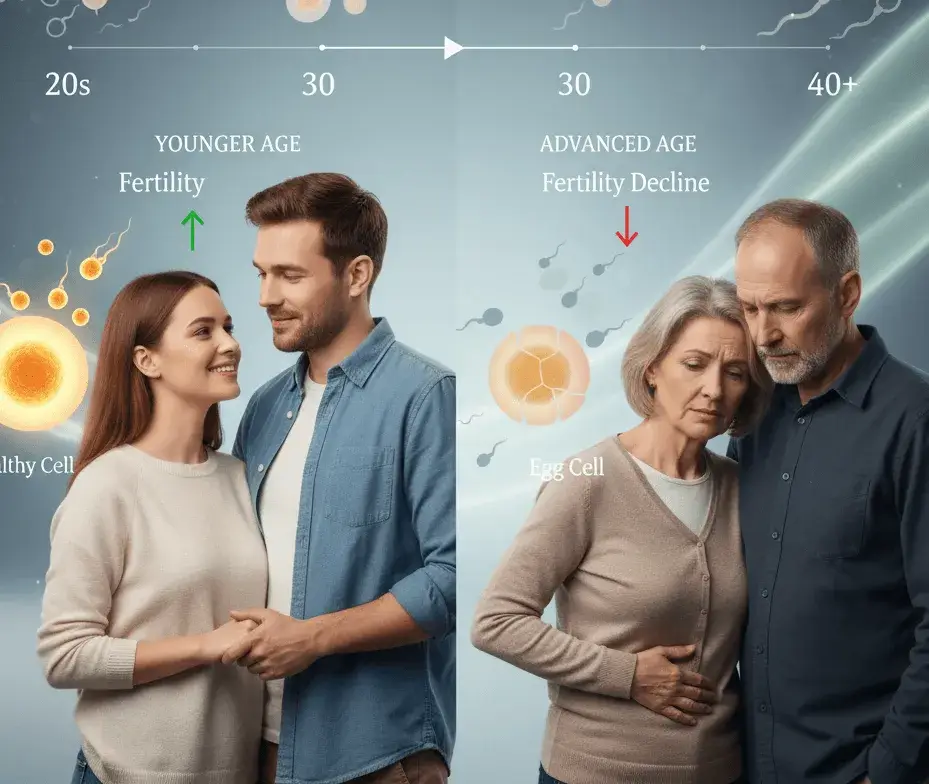
How Age Impacts Reproductive Health

In men, fertility declines more gradually. Men continue to produce sperm throughout life, but:

  • Sperm quality can decrease
  • DNA fragmentation becomes more common
  • Testosterone levels may drop

While men can remain fertile longer than women, age still plays a role in reproductive outcomes.

Female Fertility by Age

Female fertility changes with age, mainly due to a decline in egg quantity and quality. These changes become more noticeable after the mid-30s and can affect the chances of conception.

Age RangeFertility LevelKey ChangesMonthly Pregnancy Chance
20–24Peak fertilityHigh egg quality and regular ovulation25–30%
25–29Very highSlight decline begins20–25%
30–34GoodGradual drop in egg quality15–20%
35–37Moderate declineFaster decline begins10–15%
38–40Significant declineReduced ovarian reserve5–10%
41–45LowHigher risk of complications2–5%
45+Very lowNatural conception rare<2%

Key takeaway: Female fertility starts to decline more noticeably after age 35 and drops sharply after 40.

Male Fertility by Age

Male fertility also changes with age, though more gradually. Factors like sperm quality, motility, and hormone levels can decline over time, which may affect conception.

Age RangeFertility LevelKey ChangesImpact on Pregnancy
20–29PeakOptimal sperm count and motilityHighest success rates
30–39HighMinor decline in sperm qualitySlight delay possible
40–49ModerateReduced motility and testosteroneIncreased time to conceive
50+LowerHigher DNA damage in spermIncreased risks for child

Key takeaway: Male fertility declines more slowly but can still affect conception time and pregnancy outcomes, especially after 40.

Key Differences Between Male and Female Fertility

Male and female fertility decline differently over time. Understanding these key differences helps explain how age affects each partner and overall chances of conception.

FactorWomenMen
Fertility windowLimitedLonger
Egg/Sperm productionFixed number of eggsContinuous sperm production
Age-related declineFaster, especially after 35Gradual decline
Genetic risksIncrease with ageAlso increase with age
Hormonal changesSignificant (menopause)Gradual testosterone decline

Summary: Women face a sharper biological deadline, while men experience a slower but still important decline.

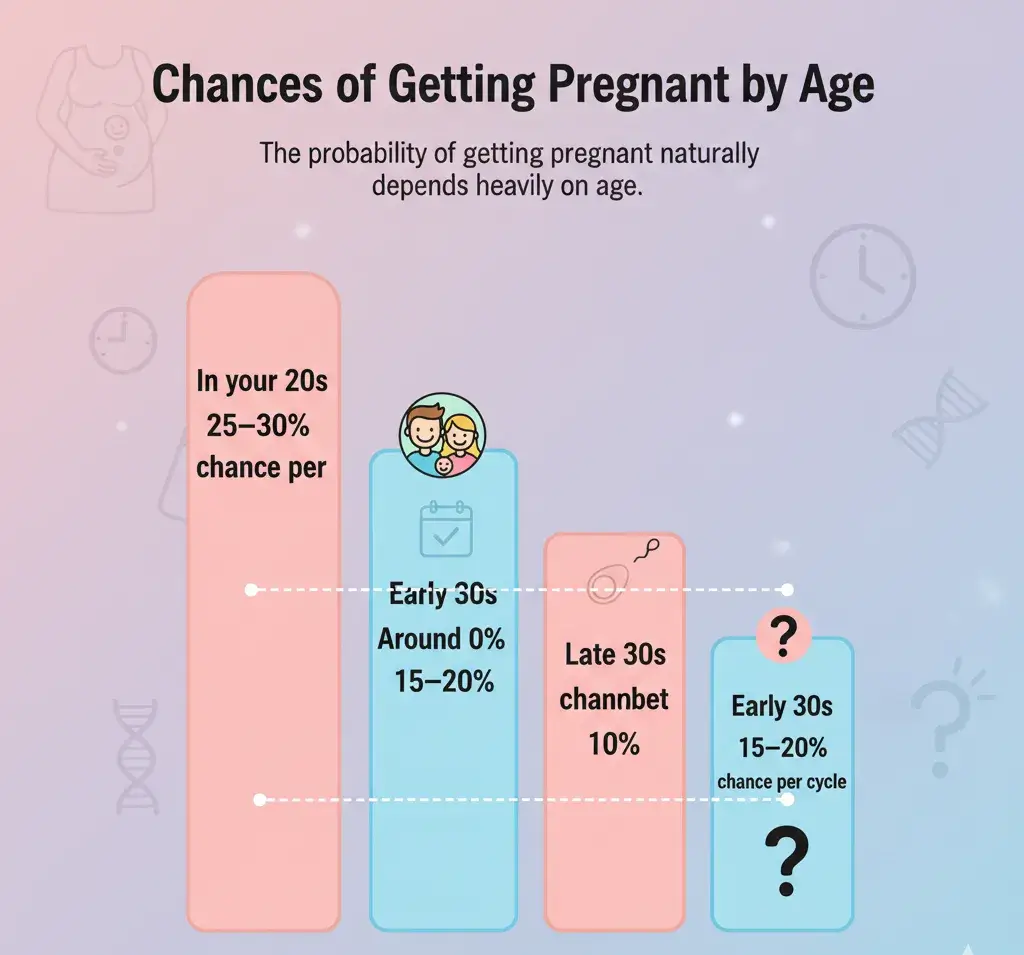
Chances of Getting Pregnant by Age

The probability of getting pregnant naturally depends heavily on age:

  • In your 20s: Around 25–30% chance per cycle
  • Early 30s: Around 15–20%
  • Late 30s: Around 10%
  • Early 40s: Around 5% or less

These numbers assume no underlying health issues and regular unprotected intercourse.

It’s important to understand that these are average estimates, and individual fertility can vary significantly.

Risks of Pregnancy at Older Ages

As maternal age increases, certain risks become more common for both the mother and the baby.

While many women still have healthy pregnancies later in life, it is important to understand these risks to make informed decisions and receive appropriate care.

Risk of Miscarriage

The risk of miscarriage rises with age, mainly due to a decline in egg quality. Poorer egg quality increases the chances of genetic issues in the embryo.

Estimated miscarriage risk by age:

  • Under 30: around 10%
  • Ages 35–39: around 20%
  • Age 40 and above: 30–50%

Most age-related miscarriages are linked to chromosomal abnormalities that prevent normal embryo development.

Risk of Miscarriage

Chromosomal Conditions (e.g., Down syndrome)

The likelihood of chromosomal conditions increases as maternal age rises. These conditions occur when there is an extra or missing chromosome during embryo formation.

Estimated risk by age:

  • Age 25: about 1 in 1,250
  • Age 35: about 1 in 350
  • Age 40: about 1 in 100
  • Age 45: about 1 in 30

This happens because older eggs are more prone to errors during cell division.

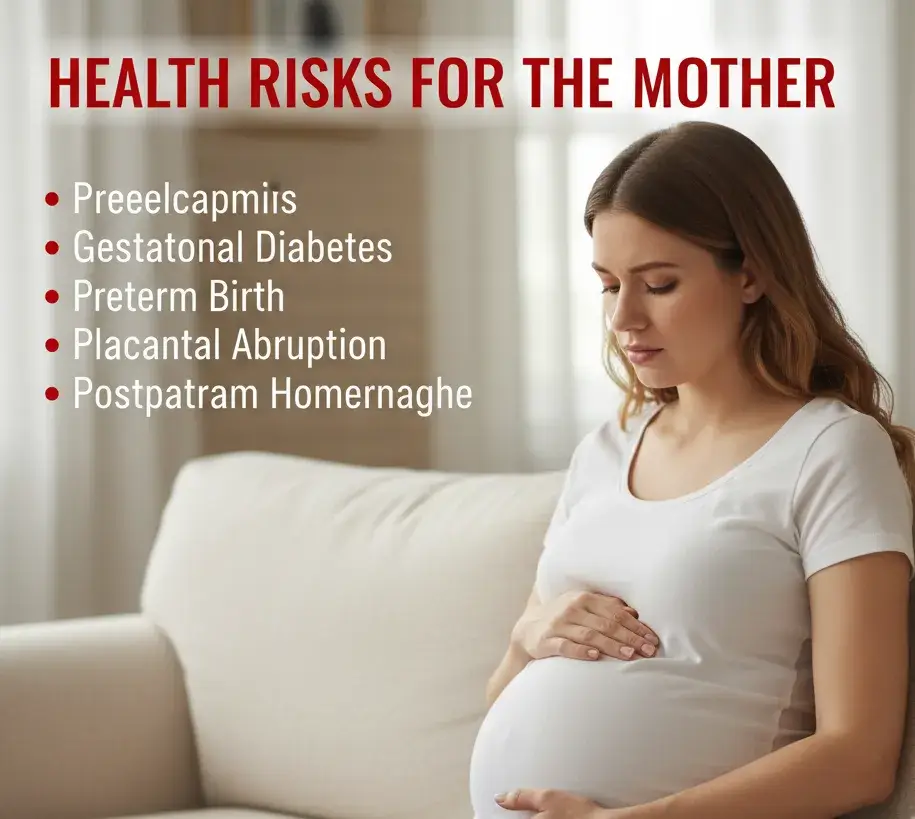
Health Risks for the Mother

Pregnancy at an older age may increase the risk of certain health conditions. These risks tend to rise gradually and become more noticeable after age 35.

Common maternal risks include:

  • High blood pressure
  • Gestational diabetes
  • Pregnancy-related complications
  • Increased likelihood of cesarean delivery

Regular monitoring and proper prenatal care can help manage these risks effectively.

Health Risks for the Mother

Health Risks for the Baby

Babies born to older parents may face a higher chance of certain health concerns. However, outcomes vary, and many pregnancies result in healthy births.

Possible risks include:

  • Premature birth
  • Low birth weight
  • Genetic conditions
  • Developmental concerns (in some cases linked to older paternal age)

With early screening and quality medical care, many of these risks can be identified and managed in time.

Signs of Declining Fertility

Fertility changes are often gradual, and early signs can be easy to miss. Recognizing them in time can help you take the right steps sooner and improve your chances of successful conception.

Irregular Periods

In women, changes in menstrual cycles are often one of the first signs of fertility decline. Irregular or missed periods may suggest underlying hormonal or ovulation issues.

Possible causes include:

  • Hormonal imbalance
  • Irregular ovulation
  • Reduced ovarian function

A consistent monthly cycle is generally a positive indicator of reproductive health.

Fertility Testing and Diagnosis
Hormonal Changes

Hormonal Changes

Hormonal shifts affect both men and women and can influence reproductive function over time.

In women:

  • Fluctuations in estrogen and progesterone

In men:

  • Gradual decline in testosterone levels

These changes may impact energy levels, sexual health, and fertility potential.

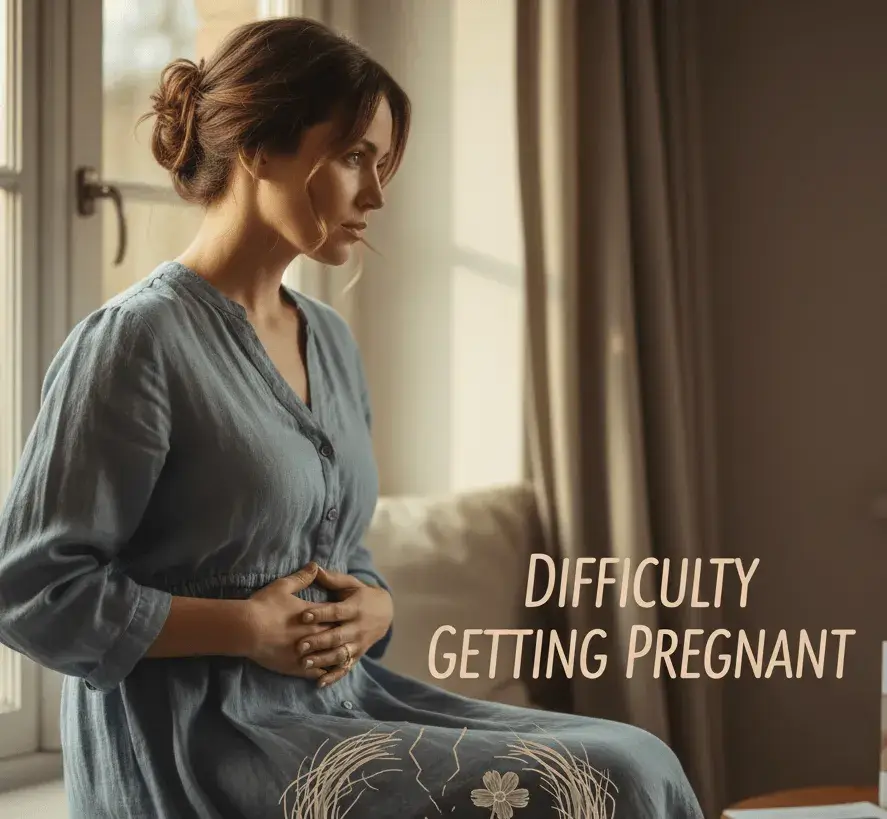
Difficulty Getting Pregnant

Trouble conceiving is often one of the clearest signs of reduced fertility.

When to seek help:

  • After 12 months of trying (if under 35)
  • After 6 months of trying (if 35 or older)

If pregnancy is not occurring within these timeframes, a fertility evaluation is usually recommended.

Difficulty Getting Pregnant

Underlying Health Conditions

Certain medical conditions can develop or become more noticeable with age and may affect fertility in both men and women.q1

Common conditions include:

In men, age-related changes may also affect sperm production and quality over time.

Common Myths About Age and Fertility

There are many misconceptions about fertility and age. Let’s clear up a few:

  1. Myth 1: Men can have children at any age without risk
    Reality: Male fertility declines, and older paternal age can increase genetic risks.
  2. Myth 2: IVF guarantees pregnancy at any age
    Reality: Assisted treatments improve chances but do not overcome all age-related declines.
  3. Myth 3: Healthy lifestyle cancels out age
    Reality: While lifestyle helps, it cannot fully reverse biological aging.
  4. Myth 4: Regular periods mean normal fertility
    Reality: You can have regular cycles and still experience reduced egg quality.

When to See a Fertility Specialist

Knowing when to seek help can save time and reduce stress.

You should consider seeing a specialist if:

  • You are under 35 and have tried for 12 months without success
  • You are 35 or older and have tried for 6 months
  • You have irregular periods or known health conditions
  • You have experienced multiple miscarriages
  • You want to assess your fertility proactively

A fertility specialist in London may recommend tests such as hormone analysis, ovarian reserve testing, or semen analysis.

Final Thoughts

Age has a clear impact on fertility in both men and women, but the pattern is different. Women tend to experience a faster decline after 35, while men usually face a slower, gradual reduction in reproductive function.

Understanding these changes is important for making informed decisions. It helps you plan ahead, notice early signs of fertility decline, and seek medical advice at the right time if needed.

Although age-related changes are natural, many people still conceive later in life with proper care and support. Staying informed and proactive can make a significant difference in your fertility journey.