
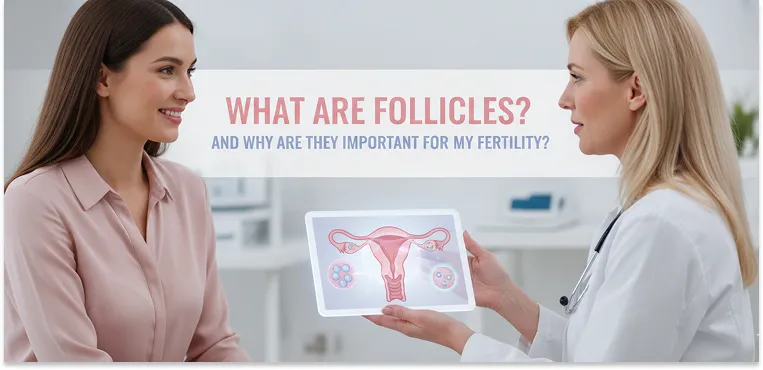
Many people hear the word “follicles” during fertility tests or scans and feel confused. If you are trying to get pregnant, it’s normal to worry about egg count, irregular cycles, or why things are taking time.
In some cases, people even start thinking about visiting a fertility treatment clinic for clarity and support.
Follicles are closely linked to your eggs and ovulation, but terms like follicle count and ovarian reserve can feel difficult at first. You may want simple answers about what is happening inside your body.
In this guide, everything is explained in a very simple way. You’ll learn what follicles are, how they work, and why they matter for your fertility and chances of pregnancy.
Follicles are small fluid-filled sacs found inside the ovaries. Each follicle contains an immature egg, also known as an oocyte.
Women are born with all the eggs they will ever have. These eggs remain inside tiny follicles within the ovaries until they begin the process of growth and development during the reproductive years.
Every month, several follicles start to mature. Usually, one follicle becomes dominant and releases an egg during ovulation, while the others stop developing.
Although the egg often gets most of the attention, the follicle itself is extremely important because it nourishes, protects, and supports the egg as it grows.
Follicles have several essential functions within the reproductive system.
Their primary role is to provide a safe environment for egg development. As the egg matures, the follicle supplies nutrients and support that help prepare it for ovulation and potential fertilization.
Follicles also produce important reproductive hormones, particularly estrogen. These hormones help regulate the menstrual cycle, prepare the uterine lining for pregnancy, and support healthy ovulation.
Without healthy follicles, eggs may not develop properly, ovulation may not occur, and conception can become more difficult.
Follicles are directly connected to a woman’s ability to conceive.
A healthy follicle contains a healthy developing egg. When ovulation occurs, the mature follicle releases the egg into the fallopian tube, where fertilization may take place.
Doctors often evaluate follicles when assessing fertility because they provide important information about:
The number and quality of follicles can help fertility specialists assess ovarian function and determine whether additional support may be needed.
Follicles go through several stages of development before ovulation can occur. This process is known as folliculogenesis.
Each stage represents a different phase of growth and maturation.
Primordial follicles are the very first and most basic stage of follicle development. A woman is born with all of these follicles already stored inside the ovaries.
Most of them stay inactive for many years, and only a small number are ever used during a lifetime.
When a primordial follicle starts to grow, it becomes a primary follicle. At this stage, the egg inside begins to enlarge slowly.
Support cells also start forming around the egg to help it grow and prepare for the next stages.
Secondary follicles are larger and more developed. The egg continues to grow, and the follicle develops more layers of support cells.
At this stage, the follicle becomes more active and responsive to hormones like FSH, which helps control its growth.
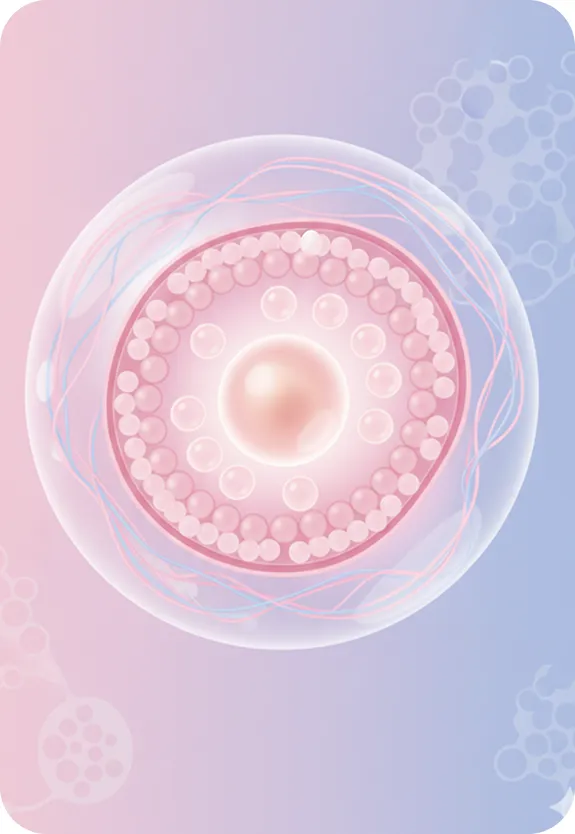
Antral follicles are small fluid-filled follicles that can be seen on an ultrasound. Doctors often count them to understand ovarian reserve.
They play an important role in fertility testing because their number can give clues about egg supply and reproductive health.
In each menstrual cycle, one follicle becomes dominant and grows faster than the others. This is the follicle most likely to release an egg.
Once fully mature, it triggers ovulation, while the remaining follicles naturally stop growing and are absorbed by the body.
Follicle size can provide valuable information about egg maturity.
As a follicle grows, the egg inside also develops. Fertility specialist clinics often monitor follicle size during natural cycles and fertility treatments.
In many cases, a mature follicle measures approximately 18 to 24 millimeters before ovulation occurs.
A follicle that is too small may contain an immature egg, while a follicle that becomes excessively large may not function normally.
However, size alone does not determine fertility. Egg quality, hormone levels, and overall reproductive health must also be considered.
Follicle count refers to the number of visible follicles in the ovaries, particularly antral follicles.
This count helps doctors estimate ovarian reserve, which is the number of remaining eggs available for future ovulation.
A follicle count can provide insight into:
While a higher follicle count often suggests a larger ovarian reserve, it does not guarantee pregnancy. Likewise, a lower count does not mean pregnancy is impossible.
Follicle count is just one piece of the fertility puzzle.
Follicles can provide valuable clues about overall reproductive health.
The number, size, and pattern of follicle growth can help identify underlying conditions that may affect fertility.
For example, IVF specialists may use follicle monitoring to assess:
Changes in follicle development can sometimes be an early sign that further investigation is needed.
This is why follicle tracking is a common part of fertility evaluations.
Hormones play a key role in controlling how follicles grow and function inside the ovaries.
Each hormone has a specific job that helps regulate the menstrual cycle and support fertility in a natural and coordinated way.
Here are the main hormones that affect follicles and what they do:
Together, these hormones work in balance to ensure follicles grow properly, mature at the right time, and support healthy ovulation for fertility.
Follicles play a central role in many infertility treatments.
During treatments such as ovulation induction, intrauterine insemination (IUI), and in vitro fertilization (IVF), doctors closely monitor follicle development.
The goal is often to encourage the growth of one or more healthy follicles capable of producing mature eggs.
Ultrasound scans are frequently used to track:
Monitoring follicles allows a gynaecology specialist clinic to adjust treatment plans and improve the chances of success.
Several issues can affect how follicles grow and function, which can make it harder to ovulate regularly or conceive. These problems often relate to hormone imbalance, ovarian health, or natural changes in the body over time.
Here are some common problems that can affect follicles:
These issues don’t always mean pregnancy is impossible, but they can affect fertility and may need medical evaluation and support.
Healthy follicle development can be supported through simple lifestyle habits that help balance hormones and improve overall reproductive health. While not everything is in your control, small changes can make a positive difference.
Here are some easy ways to support healthy follicles:
These habits won’t guarantee results, but they can create a better environment for healthy follicle growth and improve your overall fertility health.
Follicles are not just small sacs in the ovaries—they play a key role in protecting eggs, producing hormones, and making ovulation possible. Every stage of their growth is important for natural conception.
When you understand how follicles work, you also understand more about your reproductive health. They can provide useful clues about fertility, egg supply, and how your body responds each month or during treatment.
If you are concerned about your fertility, follicle count, or ovulation, it’s always a good idea to speak with a fertility specialist. They can help you understand your situation clearly and guide you toward the right next steps.


