What Is Sperm Donation and How Does It Work

What Is Sperm Donation and How Does It Work?

Struggling to conceive can be emotionally draining. Many people face issues like infertility, low sperm count, or unexplained fertility problems, which can make starting a family feel difficult and stressful.

Sperm donation is a trusted fertility option, but it can feel confusing at first. Most people have questions about how it works, whether it is safe, and what the process involves. Many also wonder how a sperm bank and donation clinic manage the process safely and professionally.

In this guide, we will explain everything in a very simple way. What sperm donation is, how it works step by step, and what you should expect along the way.

Table of Contents

What Is Sperm Donation?

Sperm donation is a fertility process where a healthy man donates sperm to help someone else have a baby. The sperm is collected, tested, and safely stored in a licensed fertility clinic.

It is used in assisted reproductive treatments like IUI (Intrauterine Insemination), IVF (In Vitro Fertilisation), and ICSI (Intracytoplasmic Sperm Injection).

In the UK, it is strictly regulated by the Human Fertilisation and Embryology Authority to ensure safety, quality, and ethical standards.

The main purpose is simple: to help people conceive when a natural pregnancy is not possible.

How Sperm Donation Works Step by Step?

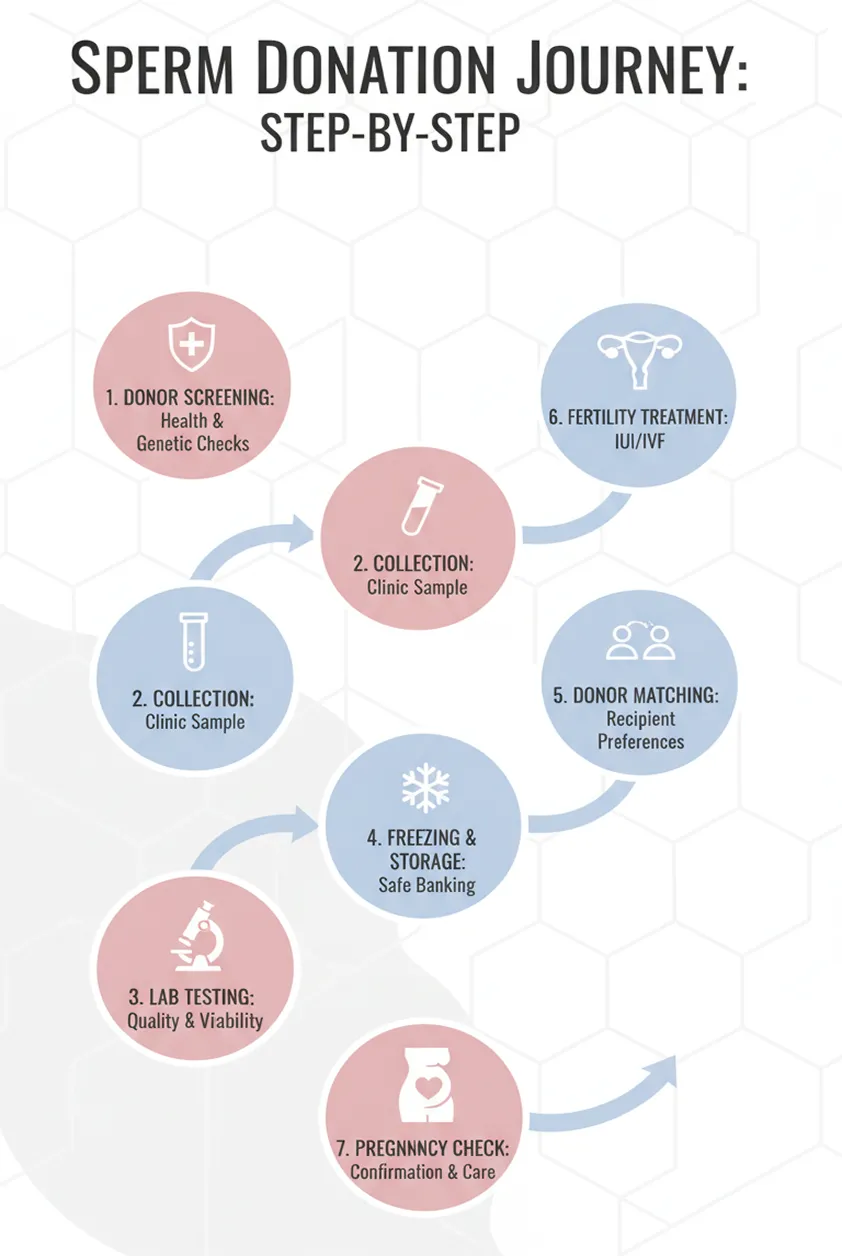
The sperm donation process is carefully structured to ensure safety for both donors and recipients. Below is a step-by-step breakdown:

  1. Donor Screening
    Men are checked for health history, infections, and genetic conditions to ensure they are suitable.
  2. Sperm Collection
    Sperm is collected in a private, licensed gynaecology clinic.
  3. Lab Testing
    The sample is tested for quality, count, movement, and any infections.
  4. Freezing & Storage
    Healthy sperm is frozen and safely stored for future use.
  5. Donor Matching
    Clinics match donor sperm with the recipient based on medical needs and preferences.
  6. Fertility Treatment
    The sperm is used in IVF treatments or IUI to help achieve pregnancy.
  7. Pregnancy Check
    After treatment, pregnancy is confirmed and monitored through regular medical care.
Who Can Become a Sperm Donor

Who Can Become a Sperm Donor?

Not everyone can become a sperm donor.

Top gynaecology clinics follow strict guidelines to ensure only healthy and suitable candidates are accepted.

Generally, sperm donors are:

  • Healthy men aged 18–41
  • Non-smokers or light smokers
  • Free from genetic disorders
  • Physically and mentally fit
  • Able to provide a detailed family medical history

Donors must also be willing to undergo screening and commit to multiple donation sessions.

Sperm Donation Requirements and Eligibility Criteria

Becoming a sperm donor involves strict medical, genetic, and lifestyle checks to ensure the safety of future parents and children. Below is a clear breakdown of the key eligibility criteria used by fertility clinics.

Category

Requirement

Why It Matters

Typical Standard

Age

Must be within the eligible range

Ensures optimal sperm quality

Usually 18–41 years

Overall Health

Good physical and mental health

Reduces the risk of complications or disorders

Assessed via medical exam

Medical History

No serious or inherited conditions

Prevents the passing of genetic diseases

Full family history review

Infectious Diseases

Must test negative

Protects recipients and embryos

HIV, hepatitis, and syphilis screening

Sperm Quality

High count and motility

Increases chances of a successful pregnancy

Lab-tested sample standards

Genetics

No high-risk genetic markers

Reduces hereditary disease risk

Genetic screening panel

Lifestyle Habits

Healthy lifestyle required

Improves sperm health and safety

No drugs, limited alcohol, no heavy smoking

BMI & Fitness

Healthy weight range preferred

Linked to sperm quality and hormones

Evaluated during screening

Psychological Screening

Stable mental wellbeing

Ensures donor suitability and responsibility

Clinic assessment/interview

Legal Consent

Must agree to the regulations

Ensures compliance with the law

Signed donor consent forms

Donation Frequency

Limited donations allowed

Prevents overuse of one donor

Controlled by the fertility authority

Clinic Approval

Must pass licensed clinic screening

Ensures safety and compliance

Approved by fertility specialists

Sperm Donation Process for Recipients

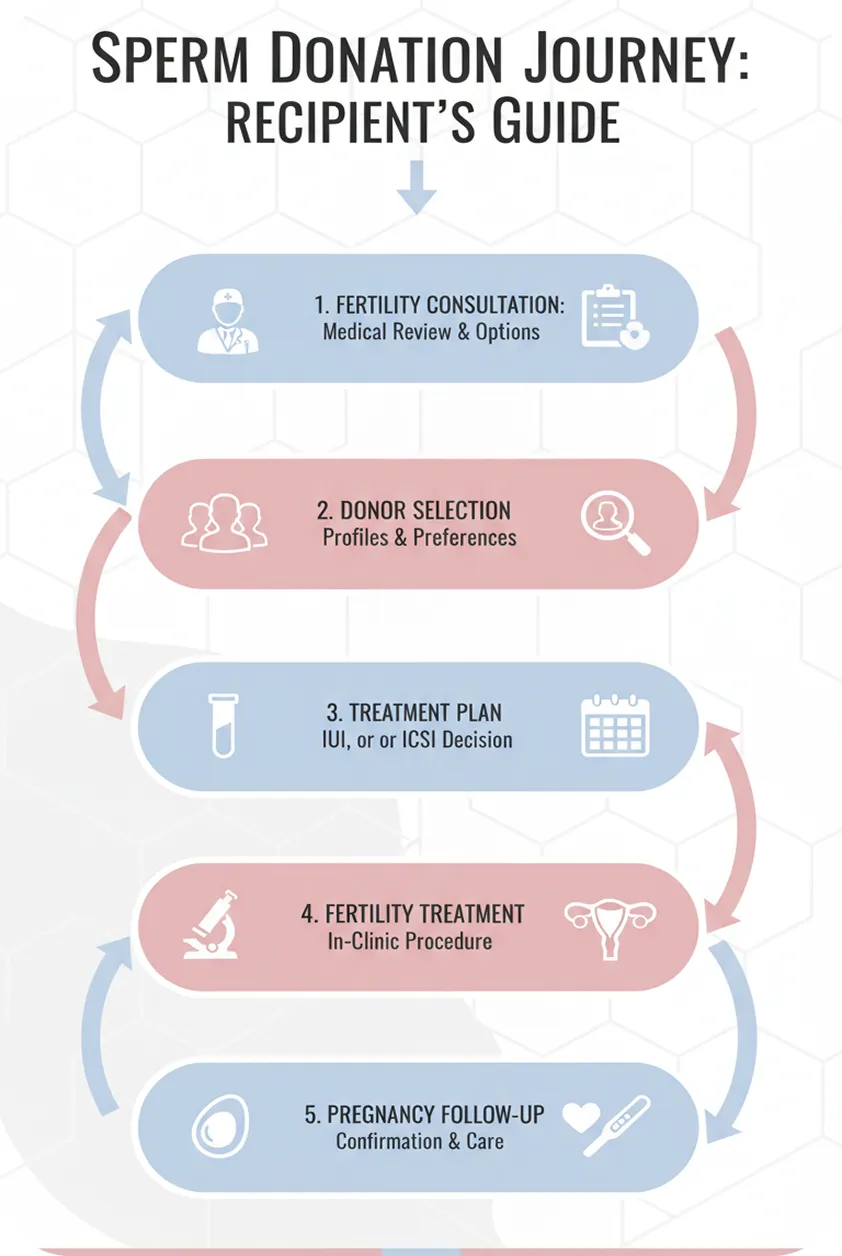
For individuals or couples using donor sperm, the process is carefully planned and guided by top-rated fertility specialists to ensure the best possible chance of success.

Here’s how it usually works:

  • Fertility Consultation
    A doctor reviews your medical history and recommends the most suitable treatment.
  • Donor Selection
    You choose a donor from clinic profiles based on physical traits, background, or medical compatibility.
  • Treatment Plan
    The specialist decides whether IUI, IVF, or ICSI is the right option for you.
  • Fertility Treatment
    Donor sperm is used to fertilise an egg either inside the body or in a lab setting.
  • Pregnancy Test & Follow-Up
    Pregnancy is confirmed through blood tests and scans, followed by regular medical monitoring.
Sperm Donation Process for Recipients

Types of Sperm Donation

There are different types of sperm donation depending on how the sperm is used and the level of donor involvement:

1. Anonymous Donation

The donor’s identity is not shared with the recipient, but in many countries, including the UK, children can access donor information when they reach adulthood.

2. Known Donation

The donor is someone known to the recipient, such as a friend or relative, but legal agreements still apply.

3. Directed Donation

Sperm is donated specifically for a known individual or couple, often used in private arrangements under medical supervision.

4. Clinic-Recruited Donation

The most common type is where donors are recruited, screened, and managed by licensed fertility clinics.

Where Sperm Donation Is Used

Sperm donation is used in a variety of fertility and family-building situations, including:

  • Male infertility or low sperm count
  • Genetic disease prevention
  • Single women choosing parenthood
  • Same-sex female couples
  • Unexplained infertility cases

It plays an important role in modern reproductive medicine and inclusive family planning.

Success Rates of Sperm Donation

Success rates depend on several factors, including age, fertility health, and treatment method.

Younger women and those with healthy reproductive systems tend to have higher success rates.

  • IUI success rates per cycle: around 10%–20%
  • IVF success rates: 30%–50% depending on age
  • Higher success rates when multiple cycles are used

Clinics often recommend multiple attempts to improve chances.

Risks and Considerations

Sperm donation is generally safe, but there are a few things to keep in mind. Some people may experience mild side effects from fertility medication, and IVF can slightly increase the chance of multiple pregnancies.

There are also emotional aspects, such as feelings about donor conception and future questions from the child. That’s why many top fertility clinics offer counselling and support throughout the process.

Cost of Sperm Donation Treatment

Cost of Sperm Donation Treatment

The cost of sperm donation varies depending on the clinic and treatment type.

Typical estimated costs include:

  • Donor sperm (per vial): £500–£1,000
  • IUI treatment cycle: £800–£1,500
  • IVF with donor sperm: £3,000–£7,000+

Some treatments may be partially covered by the NHS, depending on eligibility criteria and location.

Private clinics often provide faster access but at higher costs.

Legal and Ethical Aspects of Sperm Donation in the UK

In the UK, sperm donation is tightly regulated to protect donors, recipients, and children.

Under the Human Fertilisation and Embryology Authority:

  • Donors cannot remain completely anonymous forever
  • Children can request donor identity at age 18
  • Donors are not the legal parents of the child
  • Donor limits exist to prevent too many offspring from one donor

These laws ensure transparency, safety, and ethical responsibility in fertility treatments.

Final Thoughts

Sperm donation is a safe, structured, and life-changing fertility solution that helps individuals and couples build families when natural conception is not possible. With strict medical screening, ethical regulations, and advanced reproductive technology, it has become a trusted part of modern fertility care.

Whether used for medical infertility, genetic prevention, or personal family planning, sperm donation offers a reliable pathway to parenthood. In the UK, strong oversight from the Human Fertilisation and Embryology Authority ensures that every step is handled responsibly, ethically, and safely.

Understanding how the process works helps reduce confusion and gives hope to those exploring fertility options.