
Myths and Facts About Recurrent Miscarriage

Myths and Facts About Recurrent Miscarriage

Recurrent miscarriage is a topic where people often struggle not just with the experience itself, but with the lack of clear and reliable information. When searching online or asking around, the guidance can feel mixed, confusing, or even contradictory.

A lot of the content available is based on assumptions, outdated beliefs, or incomplete explanations. This creates uncertainty about what is medically correct and what is just commonly repeated misinformation.

Many people also look for trusted guidance from a top recurrent miscarriage treatment clinic to get clearer answers and proper medical direction.

In this article, you’ll get a clear and simple breakdown of the most common myths and facts about recurrent miscarriage, so you can easily separate medical reality from confusion and misleading advice.

Table of Contents

Why Is Misinformation Common in Pregnancy Loss?

Misinformation around miscarriage is common because the topic is not openly discussed, which leads to assumptions and incomplete understanding. People also tend to look for a single clear cause, even though miscarriage is usually complex.

Outdated beliefs passed down over time, along with simplified explanations on social media, add more confusion. As a result, many ideas shared are not fully accurate or medically supported.

In reality, most miscarriages are linked to natural biological or genetic factors rather than anything a person did or did not do.

Core Medical Reality Behind Recurrent Miscarriage

From a medical point of view, recurrent miscarriage is not a single disease but a condition with multiple possible causes.

It can be linked to:

In many cases, no clear cause is found even after investigation.

However, this does not mean a future pregnancy is impossible.

With proper evaluation and care, many people go on to have successful pregnancies.

Myths vs Facts About Recurrent Miscarriage

Before looking at the details, here is a simple breakdown of common myths about fertility and what medical evidence actually says. This table is designed to be quick to read and easy to scan.

Myths

Facts

It is the mother’s fault

It is usually due to biological or genetic reasons

Stress causes miscarriage

Normal stress does not cause miscarriage

Exercise causes miscarriage

Moderate exercise is safe in most pregnancies

One miscarriage means future loss

Many go on to have healthy pregnancies

Recurrent miscarriage means no pregnancy

Pregnancy is still possible

IVF always prevents miscarriage

IVF does not remove all risks

Bed rest prevents miscarriage

Bed rest is not proven to help

Supplements always prevent miscarriage

Supplements cannot prevent all causes

A miscarriage can always be prevented

Not all miscarriages are preventable

Age does not matter

Age increases miscarriage risk

Miscarriage is rare

It is more common than people think

1. Cause Myths

Many misconceptions around recurrent miscarriage come from unclear explanations about its causes.

This section breaks down the most common “cause-related” myths and what medical evidence actually shows.

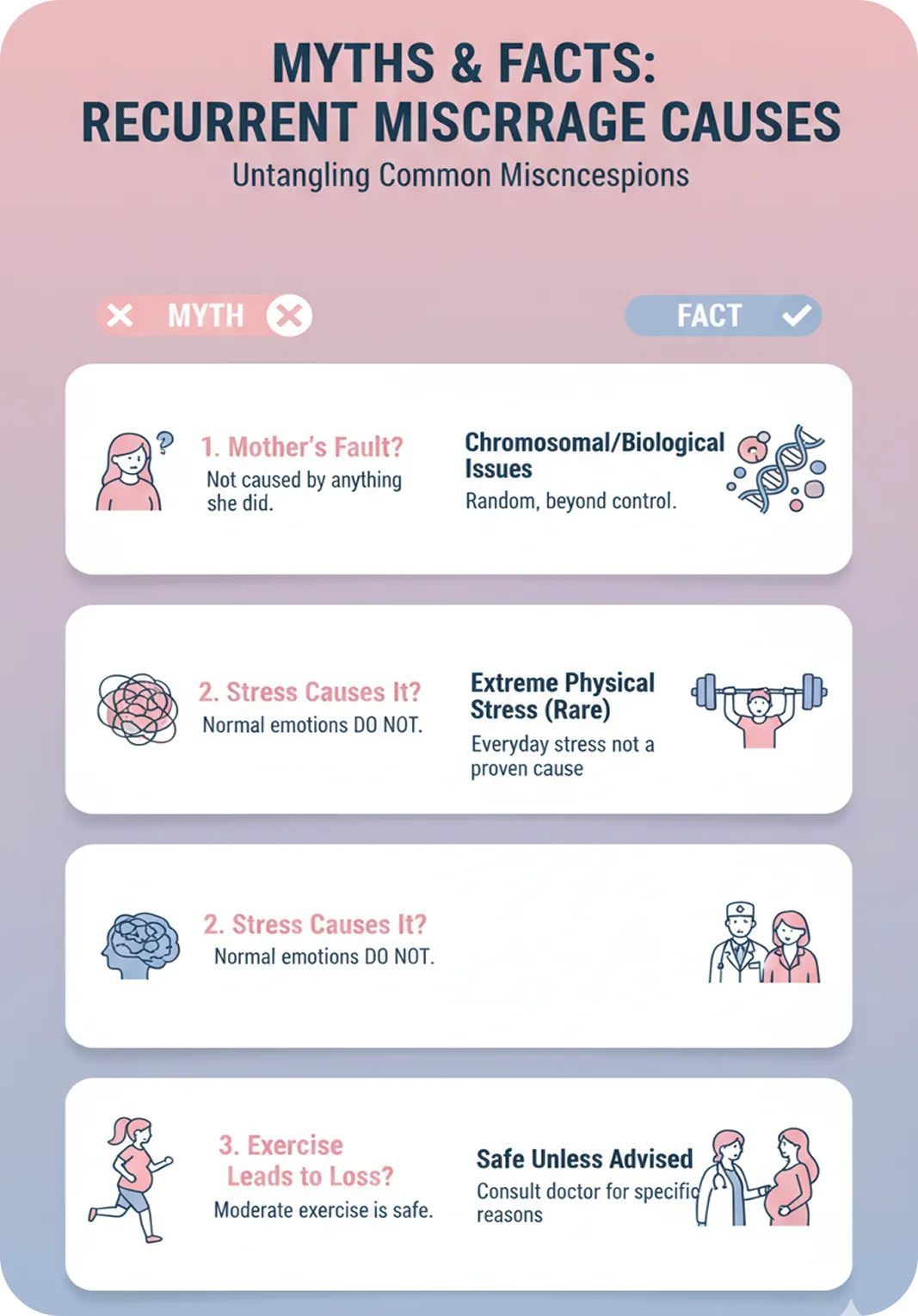
Myth: It is the mother’s fault

Fact: Recurrent miscarriage is not caused by anything the mother did. It usually happens due to chromosomal or biological issues that are random and beyond control.

Myth: Stress causes miscarriage

Fact: Normal stress or emotions do not cause miscarriage. Only extreme physical stress may affect health, but everyday stress is not a proven cause.

Myth: Exercise causes miscarriage

Fact: Moderate exercise is generally safe in pregnancy. It does not cause miscarriage unless a doctor advises limits for specific medical reasons.

2. Pregnancy Outcome Myths

This section clears up common misunderstandings about what recurrent miscarriage means for future pregnancy outcomes and chances of success.

Myth: One miscarriage means future loss

Fact: One miscarriage does not predict future pregnancy loss. Many people later have healthy, successful pregnancies.

Myth: Recurrent miscarriage means no pregnancy

Fact: It does not mean pregnancy is impossible. Conception can still happen, and many go on to have successful pregnancies.
Myth: IVF always prevents miscarriage

Fact: IVF helps with conception but does not remove all miscarriage risks, especially genetic or medical causes.

3. Prevention Myths

Many people come across advice about “preventing” miscarriage, but not all of it is medically accurate. This section explains what actually works and what does not.

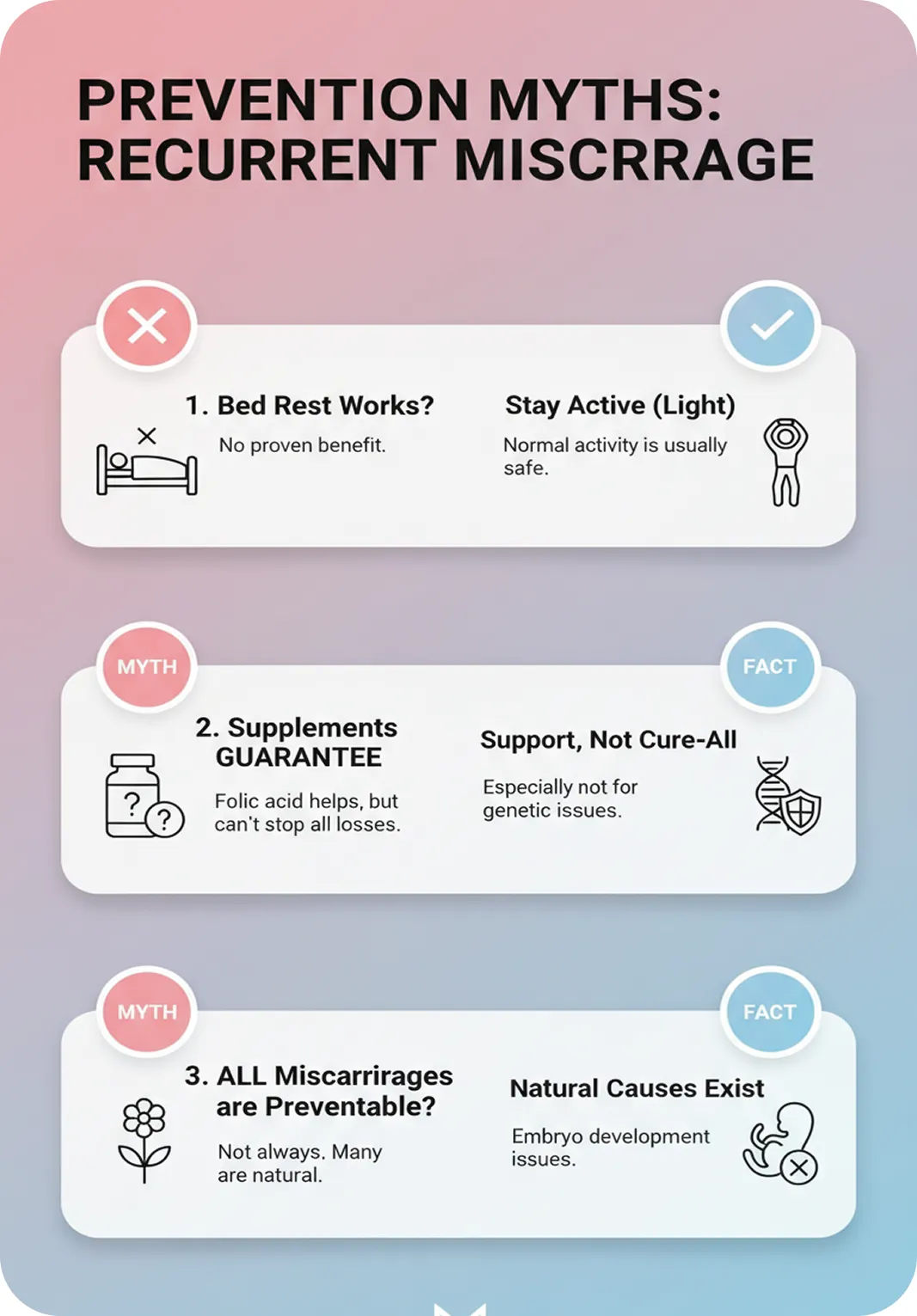
Myth: Bed rest prevents miscarriage

Fact: Bed rest has no proven benefit in preventing miscarriage. Light normal activity is usually safe unless a doctor advises otherwise.

Myth: Supplements always prevent miscarriage

Fact: Supplements like folic acid support pregnancy health but cannot prevent all miscarriages, especially genetic ones.

Myth: Miscarriage can always be prevented

Fact: Not all miscarriages can be prevented. Many happen due to natural embryo development issues.

4. Risk Myths

There are many assumptions about what increases or reduces miscarriage risk. This section clears up the most common misunderstandings with simple medical facts.

Myth: Age does not matter

Fact: Age is an important factor in fertility. After 35, miscarriage risk increases due to higher chances of chromosomal changes, but pregnancy is still possible.

Myth: Miscarriage is rare

Fact: Miscarriage is quite common, especially early on. Many things happen before pregnancy is even known.

Medically Proven Causes Behind Recurrent Miscarriage

Medically Proven Causes Behind Recurrent Miscarriage

Recurrent miscarriage can have several medically recognized causes. Some of the most common include:

  • Chromosomal abnormalities: Problems in embryo development due to genetic errors
  • Uterine abnormalities: Shape or structural issues in the uterus
  • Hormonal conditions: Such as thyroid disorders or luteal phase problems
  • Blood clotting disorders: Conditions that affect blood flow to the placenta
  • Immune system factors: Rare cases where the immune response affects pregnancy

In many situations, more than one factor may be involved.

Sometimes, even after detailed testing, no clear cause is found, which is known as unexplained recurrent miscarriage.

What Is Not a Cause (Common Misconceptions Explained)

Many people wrongly believe certain lifestyle or emotional factors cause miscarriage.

However, medical research shows that the following are not direct causes:

  • Normal work or daily physical activity
  • Mild emotional stress or anxiety
  • Previous use of contraception
  • Sexual activity during pregnancy
  • Minor falls or accidents without abdominal injury
  • Eating normal, balanced food (except unsafe substances like alcohol or drugs)

Understanding what does not cause miscarriage helps reduce self-blame and emotional distress.

How Doctors Actually Diagnose Recurrent Miscarriage

How Doctors Actually Diagnose Recurrent Miscarriage

Doctors usually take a step-by-step approach to diagnosis. This may include:

  • Detailed medical history review
  • Blood tests for hormonal or clotting conditions
  • Genetic testing for both partners in some cases
  • Ultrasound scans to check the uterine structure
  • Sometimes, specialized immune system tests

The goal is to identify any treatable cause and improve the chances of a successful pregnancy in the future.

Emotional Impact of Misleading Myths

Myths around miscarriage can have a serious emotional impact. Many individuals blame themselves unnecessarily, believing they caused the loss. This can lead to feelings of guilt, anxiety, depression, and isolation.

Hearing incorrect advice from others can also make grief harder to process. Emotional healing becomes more difficult when people are surrounded by misinformation instead of facts.

Accurate medical understanding helps reduce self-blame and allows space for healing and hope.

When to Seek Specialist Help

It is important to seek a gynaecology specialist clinic help if:

  • You have had two or more miscarriages
  • You are struggling to conceive after repeated losses
  • You have known medical conditions affecting pregnancy
  • You experience emotional distress after a pregnancy loss

A fertility specialist clinic or gynecologist can help identify possible causes and guide appropriate treatment or support options.

Final Thoughts

Recurrent miscarriage in early pregnancy is a complex condition with many possible causes, including genetic, hormonal, structural, immune, and lifestyle factors. In some cases, doctors may not find a clear reason, which can feel frustrating and emotionally draining.

Even when the cause is not immediately identified, many women still go on to have successful pregnancies with proper medical care, monitoring, and support. Each case is different, and understanding the underlying issue—when possible—plays an important role in choosing the right treatment approach.

With modern diagnostic tests and personalized fertility care, the chances of a healthy pregnancy can often be significantly improved. If you are experiencing repeated pregnancy loss, seeking early medical evaluation can make a real difference in future outcomes.