Common Causes of Recurrent Miscarriage in Early Pregnancy

Common Causes of Recurrent Miscarriage in Early Pregnancy

Recurrent miscarriage in early pregnancy is a deeply distressing experience. It affects many individuals and couples trying to build a family. Multiple pregnancy losses can cause emotional pain, confusion, and worry about what is going wrong.

Many people start looking for answers or even visit the top recurrent miscarriage treatment clinic for proper guidance and support.

One of the most difficult parts is not knowing the exact cause. Many people go through repeated losses without clear explanations, which can lead to anxiety, frustration, and fear about future pregnancies.

The good news is that recurrent miscarriage is not always without answers or solutions. In many cases, there are identifiable causes and effective treatments available. This guide will help you understand the common reasons behind early pregnancy loss and what steps can be taken to improve future outcomes.

Table of Contents

What Is Considered a Recurrent Miscarriage?

Recurrent miscarriage is generally defined as the loss of two or more consecutive pregnancies before 20 weeks of gestation. 

Some specialists may start investigations after two losses, especially if the woman is over 35 or if there are other risk factors.

It is important to understand that early pregnancy loss is relatively common, but repeated miscarriage may indicate an underlying issue that needs medical evaluation.

Causes of Recurrent Miscarriage in Early Pregnancy

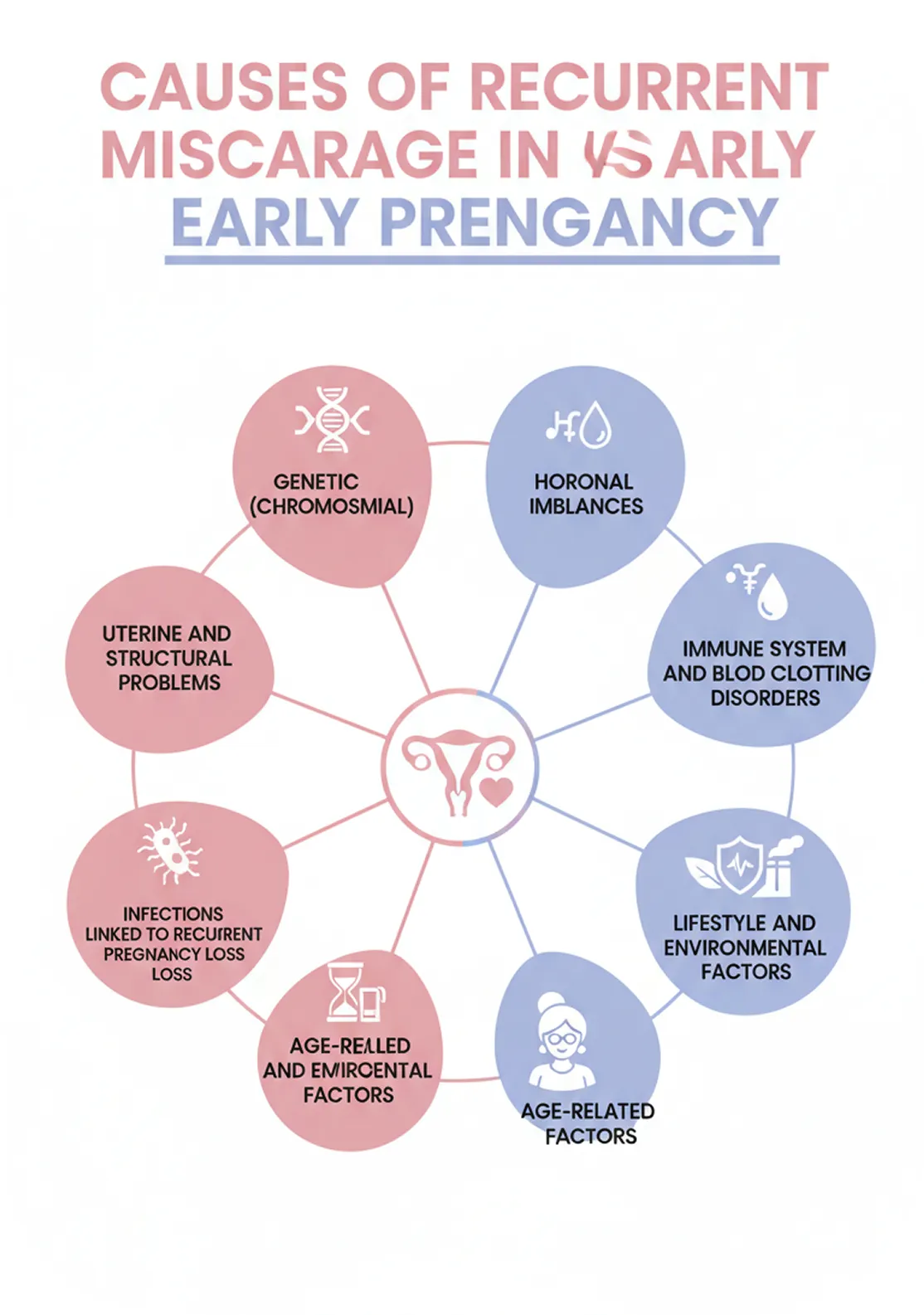
Recurrent miscarriage can happen for many different reasons, and in some cases, more than one factor may be involved.

Understanding these causes is important because it helps guide the right tests, treatment, and future pregnancy planning. Below are the most common underlying factors explained in a simple and clear way.

1. Genetic (Chromosomal) Abnormalities

One of the most common causes of early pregnancy loss is chromosomal problems in the embryo. These usually occur by chance when the egg or sperm carries an abnormal number of chromosomes.

As a result, the embryo cannot develop normally and the pregnancy ends early. In some cases, one partner may carry a balanced genetic rearrangement, which can increase the risk of miscarriage in repeated pregnancies.

Causes of Recurrent Miscarriage in Early Pregnancy
Recurrent Miscarriage in Early Pregnancy

2. Hormonal Imbalances

Hormones are essential for maintaining a healthy early pregnancy. If levels are not balanced, the uterus may not support implantation properly.

Low progesterone, thyroid disorders, or conditions like PCOS can interfere with normal pregnancy development. Even small hormonal disruptions can increase the risk of early loss.

3. Uterine and Structural Problems

The shape and condition of the uterus play a key role in pregnancy success.

Issues such as a uterine septum, fibroids, scar tissue, or congenital abnormalities can prevent proper implantation or reduce blood flow to the developing embryo.

In many cases, these conditions can be diagnosed and treated effectively.

4. Immune System and Blood Clotting Disorders

Sometimes the body’s immune or clotting system may affect pregnancy. A condition like antiphospholipid syndrome (APS) can cause blood clots in the placenta, limiting oxygen and nutrient supply to the baby. Other clotting disorders or immune imbalances may also increase the risk of miscarriage.

5. Infections Linked to Recurrent Pregnancy Loss

Certain untreated infections in the reproductive system can contribute to pregnancy loss.

These infections may affect the uterus, cervix, or placenta, creating an environment that is not supportive for early fetal development. Timely diagnosis and treatment can reduce this risk significantly.

6. Lifestyle and Environmental Factors

Daily habits and environmental exposures can also influence pregnancy health.

Smoking, alcohol use, high caffeine intake, poor nutrition, obesity, and exposure to toxins can all increase the risk of miscarriage. Improving lifestyle factors can support better reproductive outcomes.

7. Age-Related Factors

Age plays an important role in fertility and pregnancy health. As women age, especially after 35, egg quality naturally declines, increasing the chance of chromosomal abnormalities.

Male age can also affect sperm quality, which may contribute to miscarriage risk.

Causes of Recurrent Miscarriage

8. Unexplained Recurrent Miscarriage (Idiopathic Cases)

In nearly 30–50% of cases, no clear cause is found even after detailed testing. This is known as unexplained or idiopathic recurrent miscarriage.

Although this can be frustrating, it is important to know that many women in this category still go on to have successful pregnancies. The absence of a diagnosed cause does not mean future pregnancy will also end in loss.

Treatment Options Based on Underlying Causes

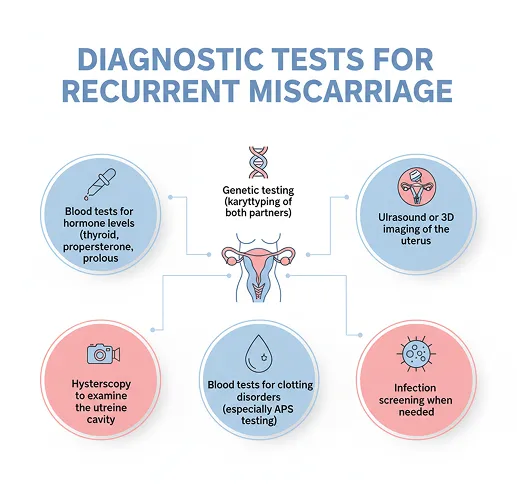
Diagnostic Tests for Recurrent Miscarriage

When a woman experiences repeated pregnancy loss, doctors usually recommend a series of fertility tests to identify the cause.

Common investigations include:

  • Blood tests for hormone levels (thyroid, progesterone, prolactin)
  • Genetic testing (karyotyping of both partners)
  • Ultrasound or 3D imaging of the uterus
  • Hysteroscopy to examine the uterine cavity
  • Blood tests for clotting disorders (especially APS testing)
  • Infection screening when needed

These tests help build a clear picture of possible underlying issues.

Treatment Options Based on Underlying Causes

Treatment depends entirely on the cause of miscarriage.

Possible treatment approaches include:

  • Hormonal support (progesterone therapy, thyroid medication)
  • Surgery for fibroids, septum, or adhesions
  • Blood-thinning medications like aspirin or heparin for clotting disorders
  • Antibiotics for infections
  • Lifestyle changes to improve overall reproductive health
  • Assisted reproductive techniques, such as IVF treatment, in some genetic cases

A personalized treatment plan often improves pregnancy outcomes significantly.

Preventive Strategies for Future Pregnancies

Preventive Strategies for Future Pregnancies

While not all miscarriages can be prevented, certain steps can improve the chances of a healthy pregnancy:

  • Maintain a healthy weight
  • Take prenatal vitamins with folic acid
  • Avoid smoking, alcohol, and harmful substances
  • Manage chronic health conditions properly
  • Get early prenatal care once pregnant
  • Follow specialist advice if there is a known condition

Emotional support is also important, as stress and anxiety can affect overall well-being.

When to See a Specialist for Recurrent Miscarriage

Early evaluation can help identify causes sooner and improve treatment success. It is recommended to consult a fertility specialist clinic or a gynecologist if:

Final Thoughts

Recurrent miscarriage in early pregnancy is a complex condition with many possible causes, including genetic, hormonal, structural, immune, and lifestyle factors. In some cases, doctors may not find a clear reason, which can feel frustrating and emotionally draining.

Even when the cause is not immediately identified, many women still go on to have successful pregnancies with proper medical care, monitoring, and support. Each case is different, and understanding the underlying issue—when possible—plays an important role in choosing the right treatment approach.

With modern diagnostic tests and personalized fertility care, the chances of a healthy pregnancy can often be significantly improved. If you are experiencing repeated pregnancy loss, seeking early medical evaluation can make a real difference in future outcomes.