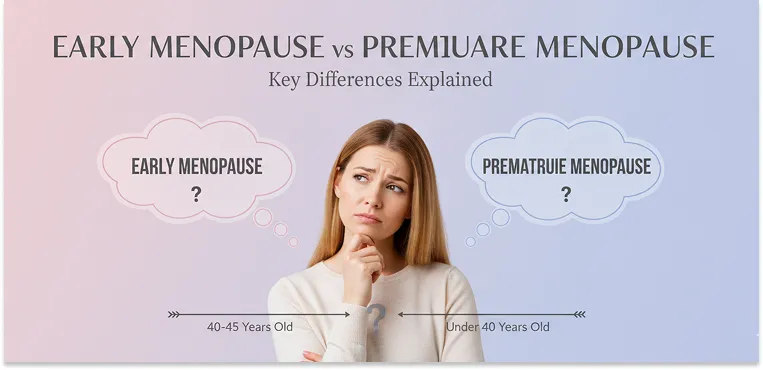
Early Menopause vs Premature Menopause Key Differences Explained

Early Menopause vs Premature Menopause: Key Differences Explained

Menopause is a natural stage when menstrual periods stop due to a drop in estrogen levels. Sometimes, it can happen earlier than expected, and many women may also turn to a menopause treatment clinic for support and guidance.

Early menopause and premature menopause are often confused, but they are not the same. The main difference lies in the age at which they occur and how the ovaries function.

In this guide, we will clearly break down early menopause vs premature menopause (Premature Ovarian Insufficiency or POI) in a simple and practical way so you can easily understand how they differ.

Table of Contents

Why Early and Premature Menopause Are Often Confused?

The confusion mainly happens because both conditions involve menopause occurring earlier than the average age (around 45–55 years).

  • Both involve reduced estrogen levels
  • Both lead to irregular or stopped periods
  • Both can affect fertility
  • Both may cause similar symptoms, such as hot flashes and mood changes

However, the key difference lies in age and ovarian function patterns. Premature menopause is more severe and occurs much earlier than early menopause.

Key Difference Between Early Menopause vs Premature Menopause

Feature

Early Menopause

Premature Menopause (POI)

Age of onset

Before 45 years

Before 40 years

Medical term

Early natural menopause

Premature Ovarian Insufficiency (POI)

Ovarian function

Gradual decline

Intermittent or sudden failure

Fertility chances

Very low but sometimes possible

Rare but occasional spontaneous ovulation

Severity

Moderate hormonal decline

More complex hormonal dysfunction

Risk level

Increased health risks

Higher long-term health risks

1. Definition & Timing

Let’s quickly understand what early menopause and premature menopause actually mean and when each one typically happens in a woman’s life.

Early Menopause

Early menopause refers to the natural cessation of menstrual cycles that happens before the age of 45. It is still considered natural menopause, just occurring earlier than average. The ovaries gradually stop releasing eggs and producing hormones.

Premature Menopause (POI)

Premature menopause, also known as Primary Ovarian Insufficiency (POI), occurs when ovarian function declines before the age of 40. Unlike early menopause, POI is not always a complete shutdown. In some cases, the ovaries may still function intermittently.

2. Causes

Let’s take a closer look at what can actually lead to early menopause and premature menopause in the first place.

Causes of Early Menopause

Early menopause can happen due to a combination of natural and external factors:

  • Genetics (family history of early menopause)
  • Smoking and lifestyle factors
  • Autoimmune conditions
  • Cancer treatments like chemotherapy or radiation
  • Surgical removal of ovaries (oophorectomy)
  • Certain chronic illnesses

Causes of Premature Menopause (POI)

Premature menopause often has deeper underlying causes, including:

  • Genetic disorders such as Turner syndrome or Fragile X syndrome
  • Autoimmune diseases attack the ovarian tissue
  • Severe infections affecting reproductive organs
  • Medical treatments like chemotherapy or pelvic radiation
  • Idiopathic causes (unknown in many cases)
  • Ovarian surgery or injury

POI is often more complex and less predictable compared to early menopause.

Symptoms Comparison

Although both conditions share similar symptoms, their intensity and pattern may differ.

Symptoms of Early Menopause

  • Irregular periods before stopping completely
  • Hot flashes and night sweats
  • Mood swings and irritability
  • Reduced libido
  • Vaginal dryness
  • Sleep disturbances

Symptoms tend to appear gradually as hormone levels decline.

Symptoms of Premature Menopause

  • Sudden or highly irregular menstrual cycles
  • Severe hot flashes
  • Noticeable vaginal dryness at a younger age
  • Anxiety or depression
  • Difficulty conceiving
  • Fatigue and brain fog

In POI, symptoms can appear more suddenly and feel more intense due to abrupt hormonal changes.

Fertility Impact

Here’s what you need to know about how both conditions may influence a woman’s ability to get pregnant.

Fertility in Early Menopause

In early menopause, fertility is significantly reduced. However, because ovarian function declines gradually, rare spontaneous pregnancies may still occur in some women. Assisted reproductive techniques like IVF may be considered if eggs are still available.

learn more: Can You Get Pregnant During Perimenopause?

Fertility in Premature Menopause

In POI, fertility is more unpredictable. Even though ovarian function is impaired, occasional ovulation can still happen in a small percentage of women. However, natural conception is rare, and fertility treatments or egg donation are often required.

Diagnosis

Let’s look at how a gynaecology clinic identifies and confirms whether it is early menopause or premature menopause.

Diagnosis of Early Menopause

Top fertility doctors usually diagnose early menopause using:

  • Medical history and symptom review
  • Blood tests checking hormone levels (FSH, estrogen)
  • Confirmation of 12 months without periods
  • Exclusion of other conditions, such as thyroid disorders

Diagnosis of Premature Menopause

Diagnosis of POI includes:

  • Hormone testing shows elevated FSH levels
  • Low estrogen levels
  • Irregular or absent periods before age 40
  • Additional testing for genetic or autoimmune causes
  • Ultrasound of ovaries in some cases

Because POI may have underlying causes, doctors often run more detailed investigations.

Treatment & Management Differences

While menopause itself cannot be reversed, symptoms and long-term risks can be managed.

Treatment for Early Menopause

  • Hormone Replacement Therapy (HRT)
  • Lifestyle changes (diet, exercise, stress control)
  • Calcium and vitamin D supplements
  • Regular health monitoring
  • Emotional support or counseling

The goal is to reduce symptoms and protect long-term health.

Treatment for Premature Menopause

Treatment for POI is often more comprehensive:

  • Hormone Replacement Therapy (usually recommended until natural menopause age)
  • Fertility counseling and reproductive support
  • Bone health protection strategies
  • Psychological counseling
  • Autoimmune disease treatment, if applicable

Because POI happens earlier, long-term hormone support is often more strongly recommended.

Long-Term Health Risks Comparison

Now let’s break down the possible long-term health effects of early and premature menopause and how they may differ.

Health Risks in Early Menopause

  • Osteoporosis (bone thinning)
  • Increased risk of heart disease
  • Mood disorders like anxiety or depression
  • Reduced metabolic health
  • Sexual health challenges

Health Risks in Premature Menopause

  • Higher risk of osteoporosis at a younger age
  • Greater cardiovascular risk due to long-term estrogen deficiency
  • Cognitive changes and memory issues
  • Higher emotional distress due to early-life impact
  • Fertility-related psychological stress

Premature menopause generally carries greater long-term health consequences because of earlier hormone loss.

Emotional and Psychological Impact Differences

Let’s understand how early and premature menopause can affect emotional well-being and mental health in different ways.

Emotional Effects of Early Menopause

Women experiencing early menopause may feel:

  • Confusion about aging earlier than peers
  • Frustration due to fertility concerns
  • Mood swings or irritability
  • Reduced confidence or body image concerns

However, many adjust over time with support and treatment.

Emotional Effects of Premature Menopause

Premature menopause often has a deeper emotional impact:

  • Shock due to very early onset
  • Grief related to the unexpected loss of fertility
  • Anxiety about future relationships or motherhood
  • Depression or emotional distress
  • Feeling “different” from peers

Because it occurs at a younger age, psychological support is often essential.

Prognosis and Outlook

Let’s look at what the long-term outlook usually looks like for both early and premature menopause.

Outlook for Early Menopause

With proper management, women with early menopause can live healthy lives. Hormone therapy and lifestyle adjustments help reduce risks and improve quality of life. Many women adapt well over time.

Outlook for Premature Menopause

Premature menopause requires long-term management. While fertility may be limited, hormone therapy and medical care can significantly reduce health risks. Emotional recovery may take longer, but support systems make a big difference.

Final Thoughts

Understanding the difference between early menopause and premature menopause (POI) is important because it helps women receive the right diagnosis, treatment, and emotional support.

In simple terms:

  • Early menopause happens before 45 and is a gradual hormonal decline
  • Premature menopause (POI) happens before 40 and involves more complex ovarian dysfunction

While both conditions affect fertility, hormones, and emotional health, premature menopause tends to have a stronger physical and psychological impact due to its early onset.

With the right medical care, lifestyle support, and emotional guidance, women experiencing either condition can still lead healthy, balanced, and fulfilling lives.